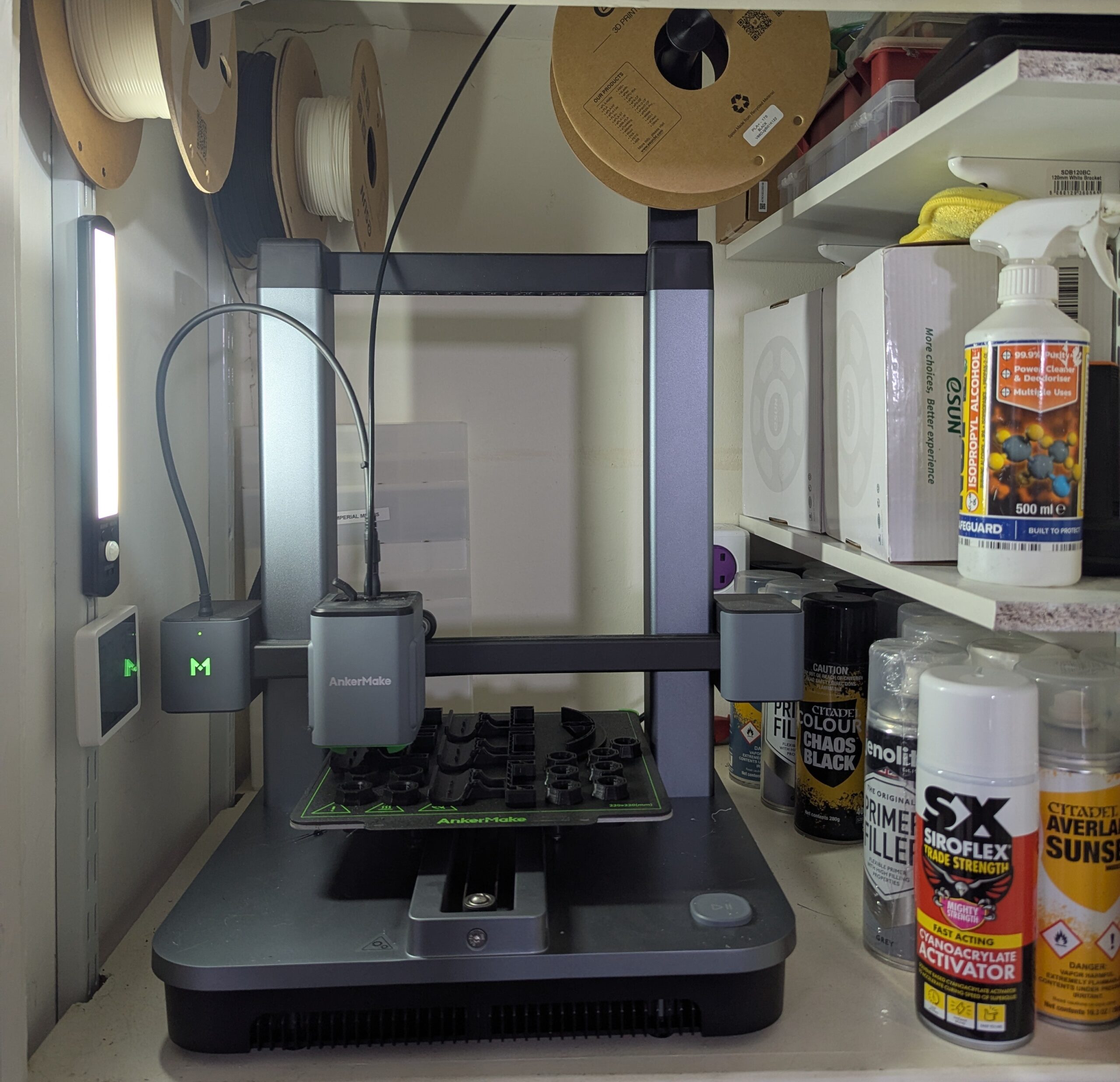
3D printers are quickly becoming as common in our homes as any other domestic appliance, at least, that’s how it feels these days. I’ve had one for about a year now and use it about as often as I use a jigsaw or a carpet cleaner.
If you’re just starting out on your 3D printing journey (or deciding if you even want to), here are some practical, real-world tips, especially for those living in England’s urban areas.
1) Treat It Like a Domestic Appliance
Yes, you can take 3D printing up as a hobby, tweaking every setting, experimenting with exotic filaments, and chasing the cutting edge. But don’t stress if your printer isn’t revolutionising your life immediately. For many people,
it’s simply another tool in the home. Use it for everyday tasks, quick fixes, or other hobbies. You don’t have to turn it into your entire world.
2) If It’s Broken, It’s Probably You
Failed print? Weird warping or stringing? Nine times out of ten, the culprit is user error. Maybe you forgot to clean the print bed, left greasy fingerprints all over it, or fiddled with software settings that you didn’t fully understand.
3D printers are more reliable than we give them credit for, most problems trace back to how we set them up or maintain them.
3) Essential Accessories (Don’t Go Overboard)
It’s tempting to buy every accessory under the sun. If you want just the essentials, however, here’s a short list:
A paving stone: Putting your printer on a paving stone helps reduce vibrations and keeps it stable. It’s cheap, nearly indestructible, and incredibly effective.
Isopropyl alcohol (IPA) in a spray bottle: Ideal for cleaning your print bed and other parts of the printer. Buy it in bulk and decant it into a smaller spray bottle for daily use poarticually for cleaning the filament bed.
Callipers: Handy for measuring the thickness of parts or filament and checking dimensions of areas you want your print jobs to fit into.
A decent steel ruler: Because bad measurements are the murder of all fun.
Other add-ons depend on your environment. If you have a cupboard or closed space for your printer, you might not need a filament dryer. i just store my part-used filament above the printer and that keeps it dry enough in England
4) Noise Is a Factor
3D printers can be loud, and long print jobs sometimes run overnight. If you’re in an urban setting with close neighbours, or if you work from home and worry about background noise on calls, consider placing your printer in a cupboard or enclosed space.
A simple trick is to hang towels in front of the cupboard door to help dampen the sound. Fancier enclosures are nice, but towels are cheaper and surprisingly effective.
5) Don’t Overcomplicate Filaments
For FDM or filament printing, which is the most common kind you will see, just find a reliable filament brand (for instance, eSun PLA+), pick a couple of colours you like (black and white often cover most household needs), and stick with them.
You can certainly go wild with speciality filaments, but for daily, practical prints, you don’t need an entire rainbow or a dozen exotic materials.
6) Resin Printing? Probably Not
If you’re in a small urban space (particularly with kids or pets), resin printing is likely off the table, much as they are awesome for highly detailed printing for things like models. Resin is toxic, the fumes are unpleasant, and disposing of resin waste responsibly can be a nightmare.
Unless you have a dedicated, well-ventilated workshop or shed (far from common in many city flats and terrace houses), an FDM printer is your safest bet.
7) Ignore the “Arms Race”
The 3D printing market is full of new “game-changing” models every other month. Don’t get caught in the hype. Choose a printer that’s well-supported, does what you need, and fits your budget. Treat it like buying a car: you want reliability, availability of spare parts, and basic features that meet your needs.
Also, 3D printers are great for helping out friends who don’t have one. Filament is relatively cheap, and you can ask them to buy you a spool if you end up printing a lot for them.
8) Be Realistic About Recycling
PLA and other common 3D filaments are technically recyclable, but don’t put it with your other recycling plastic, as the centres can’t tell them apart.
You’ll likely end up with a bin of wasted prints and supports. If you truly want to recycle, you may have to pay a specialist service. Be aware that “biodegradable” doesn’t mean it vanishes in weeks or months—it can take years. I use a propper dedicated recycling company and fill up a box which i have to have paid to be taken away (3dprintingwaste.co.uk)
9) Beware of Supports
Supports can help print more complex designs, but they waste filament, increase print time, and can be frustrating to remove cleanly. Wherever possible, seek out support-free designs or modify models to minimise the need for them. Your printer will thank you, and so will your recycling bin.
10) Finishing Touches (Without Overdoing It)
Super Glue: Works brilliantly for bonding PLA prints. The resulting join is often stronger than the original piece.
Sanding: Go easy, sanding creates microplastics. A good filler primer (e.g., Genolite Original Primer) can smooth out surfaces if you care about the final finish.
Painting: If you’re painting, a basic primer plus acrylic paints do the job nicely. Again, keep an eye on fumes and ventilation.
11) Choosing a Brand
Plenty of manufacturers want you to treat your 3D printer like a vacuum cleaner: buy replacement parts at their schedule and pay a premium for “official” bits. If that puts you off, consider something more open-source friendly like Prusa.
They’re pricier and not as “plug-and-play” polished, but you’ll have more freedom to upgrade and maintain your printer without feeling like the company is constantly trying to sell you more parts.
In the end, the brand you pick should be one that you trust to give you decent support (whether official or community-based), reasonable spare-part availability, and a long service life. If you don’t mind the consumerist approach, pick whatever brand suits your budget and tolerance for maintenance.
Final Thoughts
3D printing has grown beyond the realm of hardcore hobbyists tinkering in their sheds. It’s now a practical, everyday tool, especially for quick home fixes or small, personalised projects for those in an urban environment.
You do have to think about noise, ventilation, and space more than someone in a big house with a sprawling workshop. But once you have those sorted, a 3D printer can be a wonderful addition to your home.
Just remember: keep it clean, keep it stable (hello, paving stone!), buy good filament, and don’t worry if you’re not pushing the cutting edge of 3D printing technology. Sometimes, a simple printer that “just works” is all you need.