Real life moving tech from On-premise to Cloud

For a lot of the major companies, the quick wins of moving to the cloud, which really translates to making it easy to vertically scale some existing servers is over.

We are now getting into the area of integrating serious existing systems with cloud services and having to match the expectations of cloud services to everything else that exists in the company.

One of the big things I’ve seen now multiple times is that we are trying to match the “everything is instant” “everything is real-time” expectations of consumer level products that are built totally in the cloud with existing on premise infrastructure and platforms. “What is the problem?” I hear you cry, just upgrade everything, but it doesn’t quite work like that. Now you have a cloud system that has an expectation of receiving data from internal systems, and indeed can pull data from said systems at real time, but the source systems just can’t take that load, everything from database servers, to internal network, to app servers are not designed for such a load. Not only are they not designed for this stress in general terms, but they have not had to work out the capacitance planning for it. A perfect example of this is transactional logging. When you enable transactional logging on source systems so that they can feed these monster cloud systems, that introduces an additional load across the board and these have not been planned for, not only are these not being catered to at an IT level , but they are often ultimately driven from other business areas and the normal slow business growth planning of humans.

The points to be learned from such problems are:

  1. Communication, communication, communication: With all of your existing people. You will find you will have communication issues, but this is not down to them not wanting to grow or change. This is simply down to the speed that the internal systems is set to grow is not aligning with the cloud systems expectation. You have to work with people from all areas. You have to get them involved from the minute you’re starting to do this. Try and give them a heads up on what you’re going to do. They often have to plan their budget and how much they spend on infrastructure change and people hiring a year in advance, suddenly turning on your AWS servers and cranking them up to 11 does not help them.
  2. Expectations: Most of your customers for your systems are now expecting consumer level speeds. All of your social media plans are nearly real time. Now, all of a sudden you are expecting that from human and IT Systems that are buried deep under a whole raft of procedures that you have not changed for decades. You cannot provide real time updates to such things with only changes to IT systems, you need to bring along the business systems that are supporting them. Explain this to your cloud system consumers so they can set their expectations along real human lines.
  3. Fear: A little bit dramatic, but its a real statement, people fear change, if you do not work with people on this they will fear these changes. To gain proper improvements from cloud systems you have to work with everybody, introduce them to the advantages and their place in such a changed world, help them grow as you are helping the IT systems grow.

The best analogy I can think of to explain all this is from the image that is headlining this post, from “Appleseed” a famous comic by Masamune Shirow which confronts a lot of the issues of change in the world. One of the doctors in the comic states “You can’t give someone a Cyborg Leg Just like THAT, It’d tear out when they try to run”. Think of your move to cloud in thoese terms.

Morning Energy drinks V2

One of my big sins has always been energy drinks. I absolutely adore them, but I know they are bad for me, all the people that care about my health have very gently been trying to get me to cut them out. I have tried SodaStream with healthy energy powder, I’ve tried some of the more expensive non bad drinks, and I have tried cold brewed coffee. But none of them have been perfect. But we’re getting closer. The latest iteration is a type of cold brew coffee smoothie with Yfood + bits and I think I am getting much better at it. To recap: The best cold brew coffee maker at a cheep price is the Hario Cold Brew Coffee Pot Mizudashi Red 1000ml , which I slow filter and then leave in the fridge over night (as long as I can) this gives a very none bitter coffee, I would advise you actually get 2 of these jugs as leaving it for 24+ hours gives the best result. Next Yfood has turned out to be the best meal replacement , and far nicer than Huel (it tastes far less like porridge), I find Yfood smells far more like Nesquik but doesn’t seem to be any worse for you, it seems that it’s a much finer powder and in any cheapo blender works perfectly, it produces a lovely near milkshake level of drink. Made with cold brew coffee instead of water and you have your morning rocket fuel while tasting great. understandably the coffee flavour works best with actual coffee. The banana one I had high hopes for but it’s just not right. A recent addition to the mix is Athletic Greens, this is a good dietary powder and the only one I have found that does not swamp the other tastes. Unfortunately I do have a serious sugar craving and Golden syrup is my base line, I try to have better option such as Maple syrup or a banana if I have planned correctly. A storage medium for this kind of stuff is actually far harder than I would have expected as the stuff gets in to every crack and if you don’t clean it it sets rock hard, I have found that a couple of good options: the 330ml classic LockNLock work well to split the drink into a breakfast and a lunch portion and never leak, but seem to have been phased out by the parent company, more practically is the Chillies Coffee Cup 2 which is VERY easy to clean and works just right. Lastly the blender, I have found that just about anything works with Yfood, so no worries there.  

Admins and Manholes

This is something that I’m seeing more and more in business but historically has always been a problem in IT,

It is the little known and little appreciated individual doing a sterling job and no one noticing them.

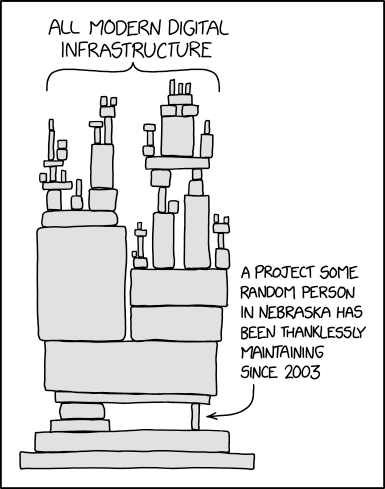
Now before I get started on this, I’m going to differentiate between them, and the rest of us, We all consider ourselves underappreciated, and we could all do with a pay rise or a promotion or whatever. but if your boss knows that you consider yourself underappreciated or you complain about it, then you are not one of these people. I’m talking about the database admin that does their job each and every day without a complaint. I’m talking about the firewall person who makes sure all of the tables and all of the structures are working for all projects without being chased, so that a working network is taken for granted, the person that manages something buried deep that everybody uses but is unaware is vital for the state of the nation.

https://xkcd.com/2347/

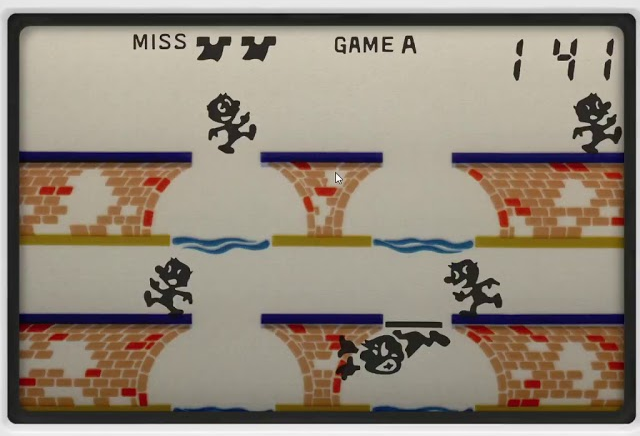
XKCD did this excellent drawing which visualises the issue from an IT perspective, but I personally prefer the term: ‘manhole admin’, which harks back to the old Nintendo game and watch. It was an awful game, I hated playing it, but in it, you control a person leaping around trying to cover up every one else’s problem. No one notices anything when he does a successful job they just go on their way with no thanks, but when he screws up Ohhhh does he get blamed. Such people exist all over the place. Often they are dismissed with a ‘no one is irreplaceable’, and while it is true, such people deserve recognition. and if they got such recognition on a regular basis, the roles they play would be revealed to be vital.

However there is a slight twist to this lesson, when you acknowledge such work don’t do the knee jerk reaction of “oh this is suddenly important, we better outsource it to a team and thus if it fails it wont be my fault; it will be someone else’s”, keep that person in charge of the deliverable and acknowledge their value, yes put in contingency, and backup people, But don’t take this persons work that they take pride in away from them.

“Acid Sam” Run No. 8

Welcome to Episode 8, as I continue trying to get a really good “Acid Sam” time 1, An “Acid Sam” 2 is 100 Kettle bell Snatches followed immediately by a standard “Acid Bath” fitness test.

Progress and attempt times

For details of the test please see the bottom of this post

This week I set the hard goal of under 12mins, I managed 11:56, so I am very happy, this time I remembered to set up all the equipment correctly and that saved a good 10 seconds, but I think the big difference is that I set a final “reasonable goal” interval at the end as currently I know I wont get to 11mins, but now that I know I have the timings right it seems stupid to mess with them, so I just bolted a final interval on the end, and aimed for that

  1. 20 Snatches Off hand (0:58)
  2. 20 Snatches On hand (0:58)
  3. 15 Snatches Off hand (0:43)
  4. 15 Snatches On hand (0:43)
  5. 10 Snatches Off hand (0:29)
  6. 10 Snatches On hand (0:29)
  7. 5 Snatches Off hand (0:15)
  8. 5 Snatches On hand (0:15)
  9. Transfer Over to Acid Test (10 seconds using the Kettle Bell time, 10 seconds using the Acid bath time) (0:20)
  10. 500m Ski Erg (1:55)
  11. 500m Row (1:55)
  12. 1km Bike Erg (2:00)
  13. This weeks Goal time 12:00 (so final interval is 1:00)

Test Details

100 Kettle Bell snatches

Sam is prepping me so I can match the “Russian Kettlebell challenge certification Requirements” , so I use a session kettlebell of 24kg which is a basic standard for someone of my size 3

Time: between 5 – 10 mins, with under 5 mins without the Kettle bell touching the floor as the strict challenge (see details).

Details: The proper details of the challenge ( taken from) + the no set down rule:

Begin by getting into position, Hike-pass the kettlebell back and snatch it overhead in one movement, ending with a straight-arm lockout.
    • You may swing and change hands as much as needed
    • You may set the kettlebell down and rest as needed
Acceptable hand-coverings for the test include: tape, socks, Dragon Skins™, and minimalist gloves (i.e. cotton gardening gloves). You may use chalk and reapply it during the test, if needed. You may not use belts, thick or padded-gloves, wrist wraps or any other equipment designed to support your body.
No Count Criteria
    • Not locking out the elbows.
    • Rebending the knees on the way up.
    • Failure to stop all movement at the lockout.
    • Pressing out the kettlebell to finish your lockout.
    • Touching the chest with the working arm or passing through the rack position on the way down.
    • Placing a hand on the knee or thigh.
Failure (strict challenge)
Failure on the strict challenge will occur if:
    • You Touch the kettlebell with the non-working arm, unless you are switching hands.
    • You drop the kettlebell rather than setting it down with control (at the end).
    • You run out of time before completing the required number of reps.
    • You set down the kettlebell on the floor before the end.
Snatch Test Requirements:
For the snatch test, the sum of both arms is scored. There are different requirements based on gender and age group (Only the Open ones are listed here). They are as follows:

Men’s Open Class:

  • Up to 135 pounds     18kg 100reps / 5 min
  • 136-150 pounds       20kg 100reps / 5 min
  • 151-165 pounds       22kg 100reps / 5 min
  • 166-250 pounds       24kg 100reps / 5 min
  • Over 251 pounds     24kg 100reps / 5 min
  • Over 251 pounds (mad option) 28kg 100reps / 5 min

Women’s Open Class:

  • Up to 100 pounds     10kg 100reps / 5 min
  • 101-120 pounds       12kg 100reps / 5 min
  • 121-135 pounds       14kg 100reps / 5 min
  • 136-200 pounds       16kg 100reps / 5 min
  • Over 200 pounds      16g 100reps / 5 min
  • Over 200 pounds  (mad option) 18kg 100reps / 5 min

Acid bath

Details: The “Acid bath” is a standard fitness set which consists of the following:

For standards these all have to be done on the concept2 range of equipment.

Time: Men are supposed to do this under 6 minutes and Ladies under 7.

I monitor all of this with “Seconds Pro” as the best app to time it and here is the current set for you to use.

  1. , A Base goal of 11 minutes and a perfect goal of 10:30 seconds.[]
  2. Named after my fab PT Sam Bradley. []
  3. The weight you would take into a class.[]