“It is defined as the point where high difficulty stops being a stimulating challenge and becomes merely f**king me about” – Zero Punctuation
Explanation:
This phrase has been lifted in its entirety from the review of “The Surge” by Zero punctuation,
In corporate terms, this is when you have finally reached the stage with any kind of stakeholder where you know nothing you can do or say will make them stop blocking your deliverable.
This could be a member of business for whom you are changing the way they have to work for an accepted reason i.e. New regulations
This could be a localised stakeholder where you are implementing a global project, and it will ruin their little empire.
This could be a technical staff member for whom you’re either taking control away from what they’re currently doing, or implementing a way that they suddenly receive oversight.
It is just a time where you have made every attempt to cater to someone’s needs, you have bent over backwards and they still just keep making stuff up in meetings.
You can see it in people’s eyes when you or they hit this moment, and it’s always a definition of professionalism as to how its handled. Do people utterly flip out and rage? or is it taken offline and hard evidence is presented that this person is an active hindrance to delivery (always a grim moment).
Anyway, I have met no better phrase for that moment of realisation that someone is just a blocker and holds no further use to the project.
Disclaimer: As always these posts are not aimed at anyone client or employer and are just my personal observations over a lifetime of dealing with both management and frontline associates.
So you are on a giant multi deliverable project, but there are certain shared resources that do tasks that are common to all streams, say they create users, or allocate database space, or do training, etc etc
And you need these people to do their work on your deliverable right now!. your deliverable might be important to the senior management, it might even be absolutely critical to the project. Unfortunately, EVERYBODY feels exactly the same way about their part in the project. and here is where the purpose of this tip is. That even though you might have the backing to put pressure on the shared resources, does doing that actually help the project long term, because yes you have your stuff over the line, but have just screwed up other peoples work plan, added extra pressure, and done nothing to help in return for the help you have received.
As a delivery manager it’s your responsibility to ask, “what is in the way of doing my work now?”. And in return for them raising your priority, go and speak to the people whose work you have just overridden, make sure that they understand that things have moved and the reason for that. Otherwise you just make life harder for other people, you can see this in the way that “go to” people start to hide from you, as you bring nothing but trouble and don’t clean up after yourself.
This can be done really simply, just the phrase: “Tell me who is blocking this and I will go talk to them”, It makes all the difference to the person who you are asking help from.
Disclaimer: As always these posts are not aimed at anyone client or employer and are just my personal observations over a lifetime of dealing with both management and frontline associates.
“Everyday has a headline story”, is something used in reference to traditional newspapers, and infers that no matter how much or little news happens in a day, there will always be something that is put in the biggest font at the top of the page. In stress terms this is another way of saying it doesn’t matter how hard you work, you will never be able to clear down everything. You just can’t do it, particularly in a corporate environment. If you managed to clear down the things that are genuinely ultra important, then other things will have their visibility raised, and then you get chased for those. That’s not to say that you don’t work your very best and you try and do good quality work, doing that will make a difference 1, but know from a pure stress management point of view, that you will never be able to clear all the decks, there will always be something that is the most important thing that day. I’m explaining this badly, so let me relate it to my own way of working. I have found a level I know that if I deliver at, then no one can look at my day, and not think I have not busted a gut. but there is a difference between busting a gut while doing your best versus putting yourself in a hospital or giving yourself Burnout 2, this is a level I can keep running at indefinitely with a bit “left in the tank”, I use that for genuine “Headline” tasks, but its not for daily use, it would kill me. As I’ve mentioned on other posts if you’re running at 100% all the time, genuinely 100%, Then you will not have any surge left in you should your work have a genuine crisis. So hold on to that as a stress management marker. Hold on to it, realise that not everything that is claimed as important, actually needs you to stop the press!!. ..Cough.. So this post is written with a certain target audience in mind, and that is normal corporate people that will work to a normal retirement age, However there is a sub set of people who it does not apply to, and that is the high burn jobs: Fighter pilots, Investment brokers, Surgeons etc. etc. . Such people have a far shorter working life and as such they are paid a lot more to make up for it, If you have a manager that is trying to get this level of performance out of you, then you should be paid at the performance level you are giving, as you are genuinely burning your self faster than you should.
To your personal sense of worth and job satisfaction if nothing else[↩]
And by Burnout I mean the real deal, not something that can be fixed with a 2 week holiday[↩]
The 3 minute guide for non technical managers on how to tell a shared service from software as a service.
This is a recent little wrinkle that managers face, and it’s because everyone thinks everything is ‘in the cloud’, as if that cures all ills, but as we all know, the cloud is just someone else’s computer.
There is a big difference in different types of ‘cloud’ offerings, most of you who have worked in IT for anytime in the last five decades, will know the concept of sharing a database server with other people, or sharing a Storage Area Network with other department. You have to be a good tenant and learn to share. If you savage the space on the SQL Server, the DBAs will get angry with you, if you behave badly on the SAN then you will be moved, to either a different SAN or your bandwidth will be throttled. This is something everybody understood.
Now with the advent of things like AWS, and Microsoft Azure, the full concept of software as a service has arisen, you cannot actually be a bad tenant on such systems. You can push them as hard as you can possibly manage, and they will just scale up 1, This has made things really very easy, We haven’t had to do capacity management or a lot of the normal historically planning. This has made some people’s jobs much easier and less questions are now ask, so when people want to introduce something that is web based, they will often call it software as a service, but it’s not. It’s just a different form of shared service. what is the top easy way of telling this??
Is there a bill when you use more??
That’s it!!, if people just let you use it without a itemised bill, then it’s a shared service. If people bill you more the more you use it, then it’s software as a service.
Why is this important? because you can BREAK shared services, you can overload them and impact the other tenants, You can get yourself thrown off. You can get yourself into all sorts of trouble over it. You have to be well behaved just like in the old days.
So don’t let anyone fool you, unless you’re getting an extra bill for your extra usage, It is a shared service, you can break it, simple as that. If there’s no money exchanged, then it’s not unlimited. Think back to when the internet suddenly got popular, and Internet Service providers advertised unlimited usage. Everybody that pounded the hell out of it suddenly got caught up by ‘fair usage’. They didn’t want to go back on the fact that they sold you unlimited, but it wasn’t. It had a usage limit. Same is true on these apparent cloud services.
Not all services are created equal.
Disclaimer: As always these posts are not aimed at anyone client or employer and are just my personal observations over a lifetime of dealing with both management and frontline associates.
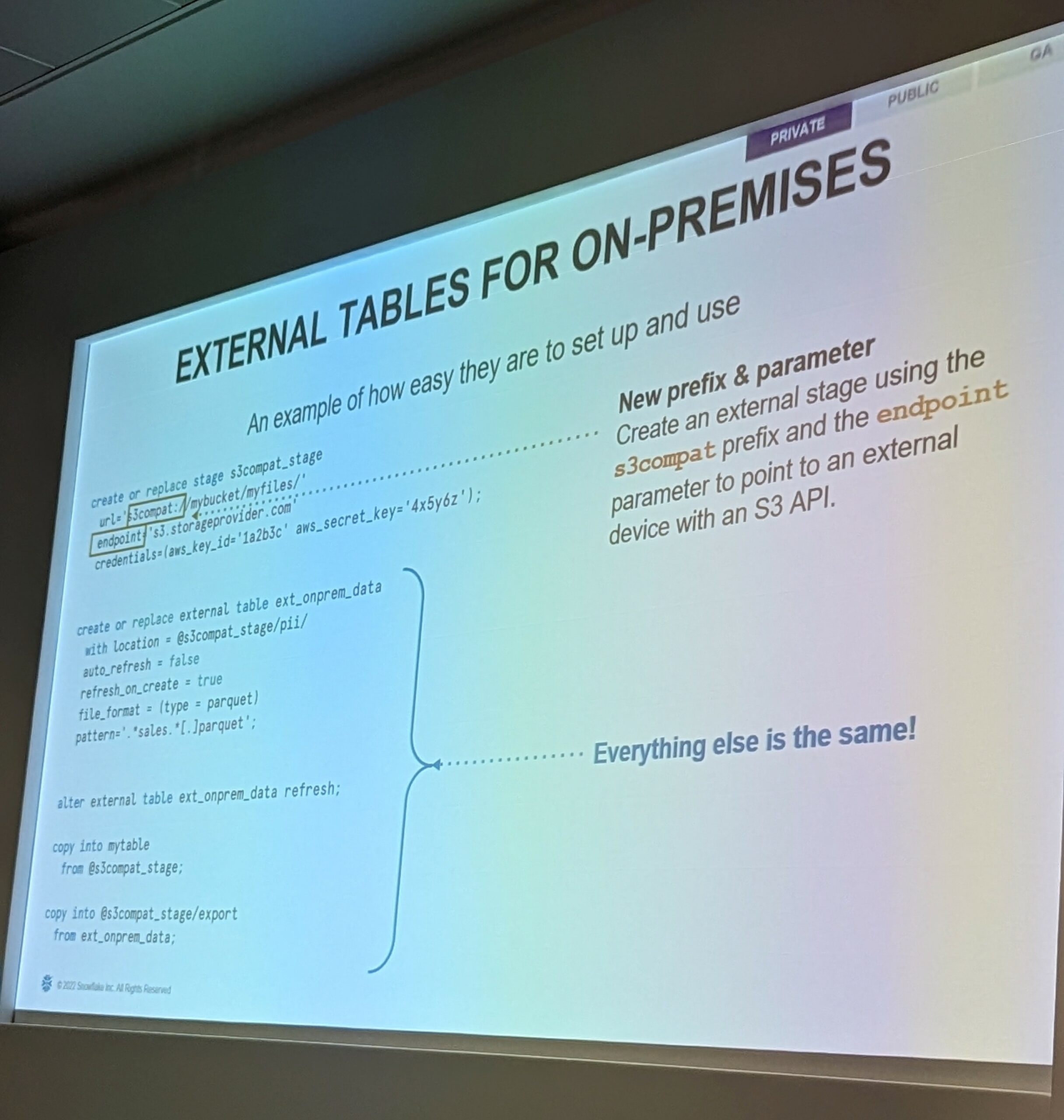
Snowflake Cloud World Tour 2022 London was my first proper conference in well.. Years. and it was lovely to get back to them.
This one was at the Excel centre London and with the new Elizabeth line, that meant that getting from the finance district (Liverpool Street) to the conference was truly 20 minutes door to door, making it absolutely perfect for me and a lot of the attendees, particularly as this was only a one day conference mid week, which meant that I could actually drop into work, get some stuff done, then nip over to the conference in plenty of time for coffee and keynote.
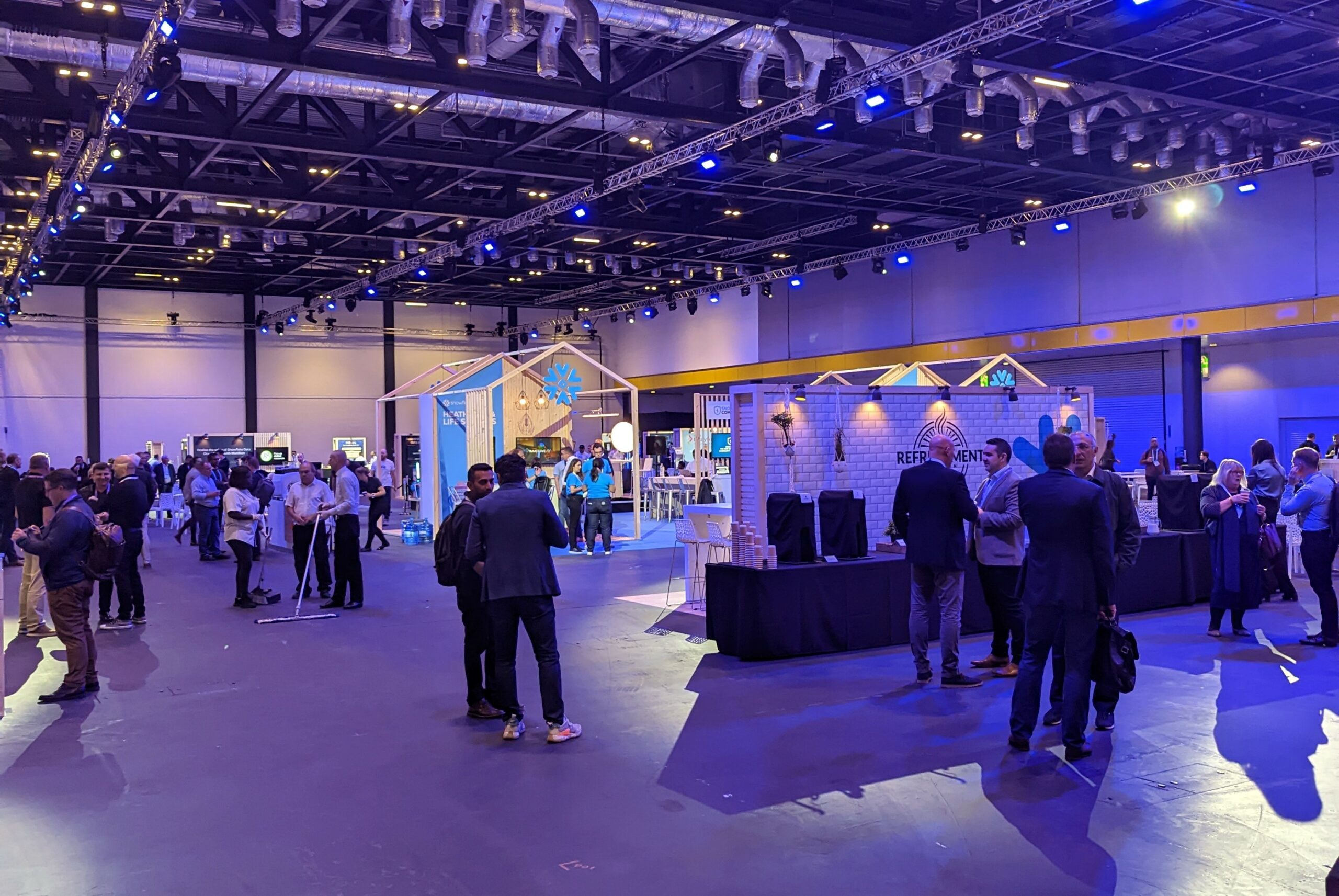
The external directions weren’t anything to speak of, but once you found the hall it was situated in 1, everything was nice and easy. Registration was very smooth and catering was a professional affair. As a previous booth babe and stallholder myself, the layout of the stalls was just right. Everyone had sufficient space. Wi Fi was solid, plus all other kinds of facilities you would hope for in a conference were there.
This was early in the morning, so it filled up later
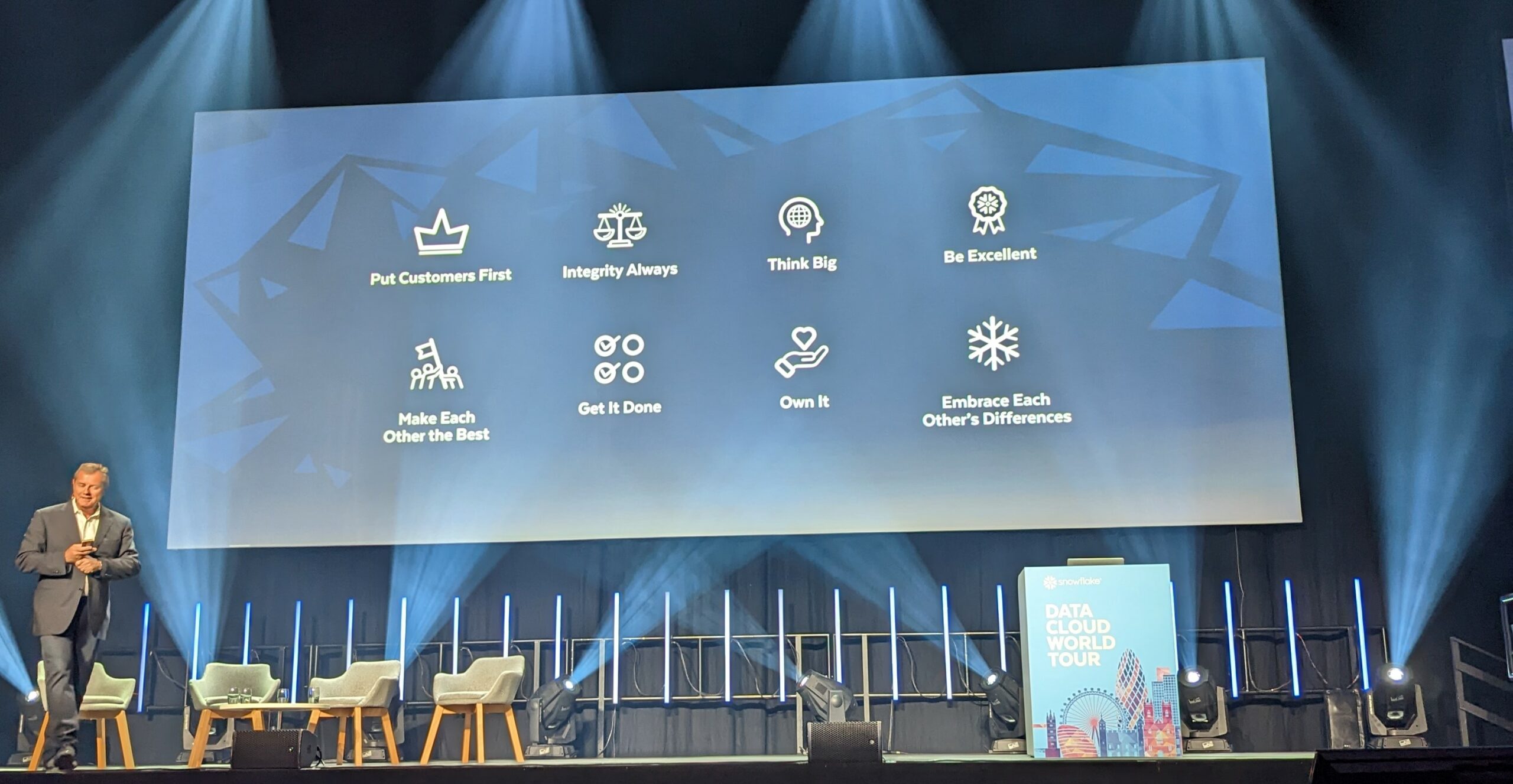
The event its self was much smaller than I was expecting 2. But nonetheless it had a good and well balanced opening Keynote which had all you would want in it, from demos to new reveals, to company history, all that kind of stuff.
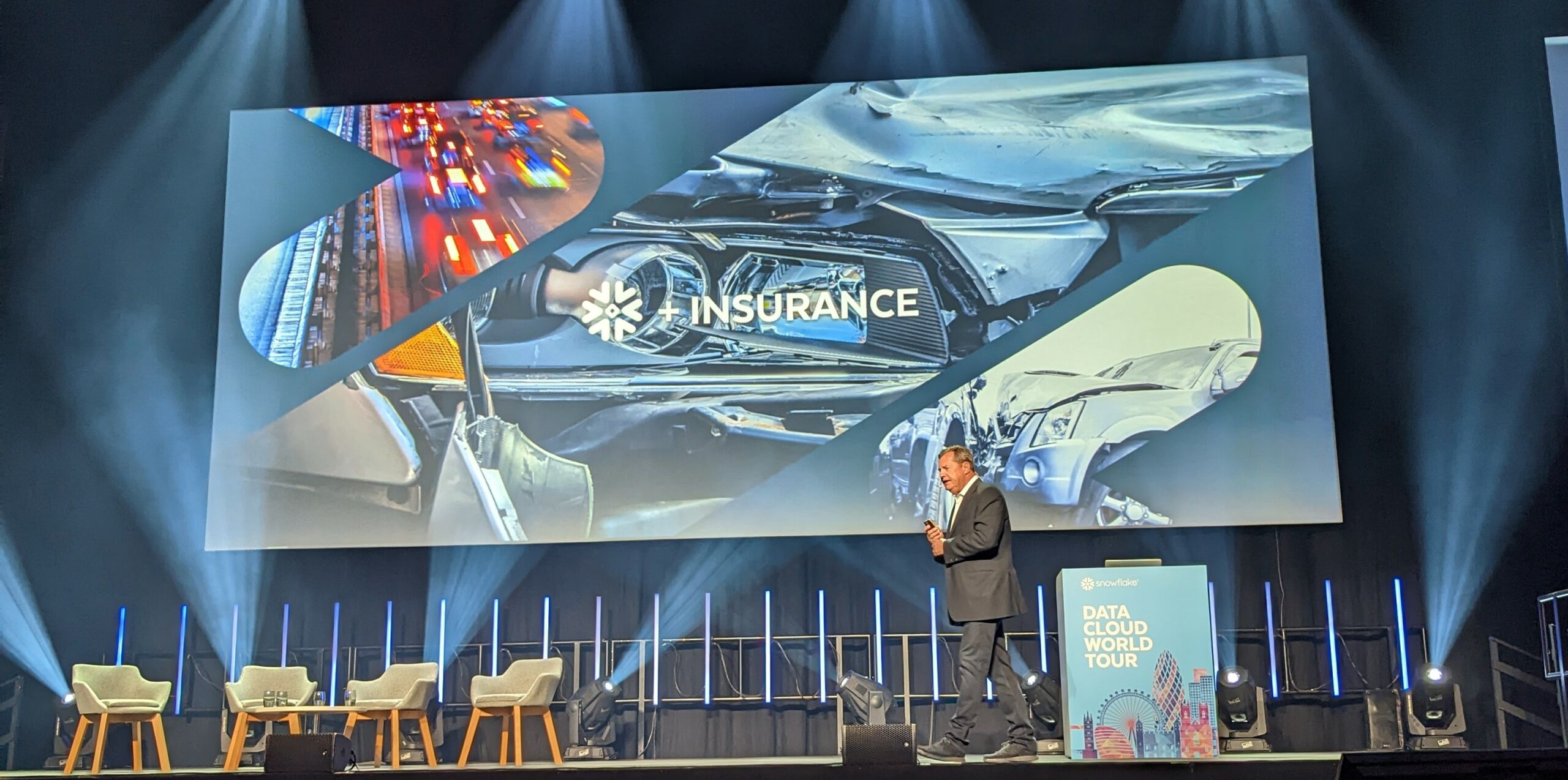
I particularly liked that each of the major industries got a little shout out and an acknowledgment of how they are being addressed
“I remember early on, the CEO of a very large insurance company in the US really didn’t want to talk about architecture and computing, because they’re insurance people right. They said we may have very different insurance claims between Northern Ireland and Ireland itself. How do you explain that? And how can you do that fast and how can you do it accurately, as we may have to change policy or we have to change pricing. This is the type of stuff that preoccupies insurance executives because that’s the difference between winning and losing, and being profitable and being unprofitable”
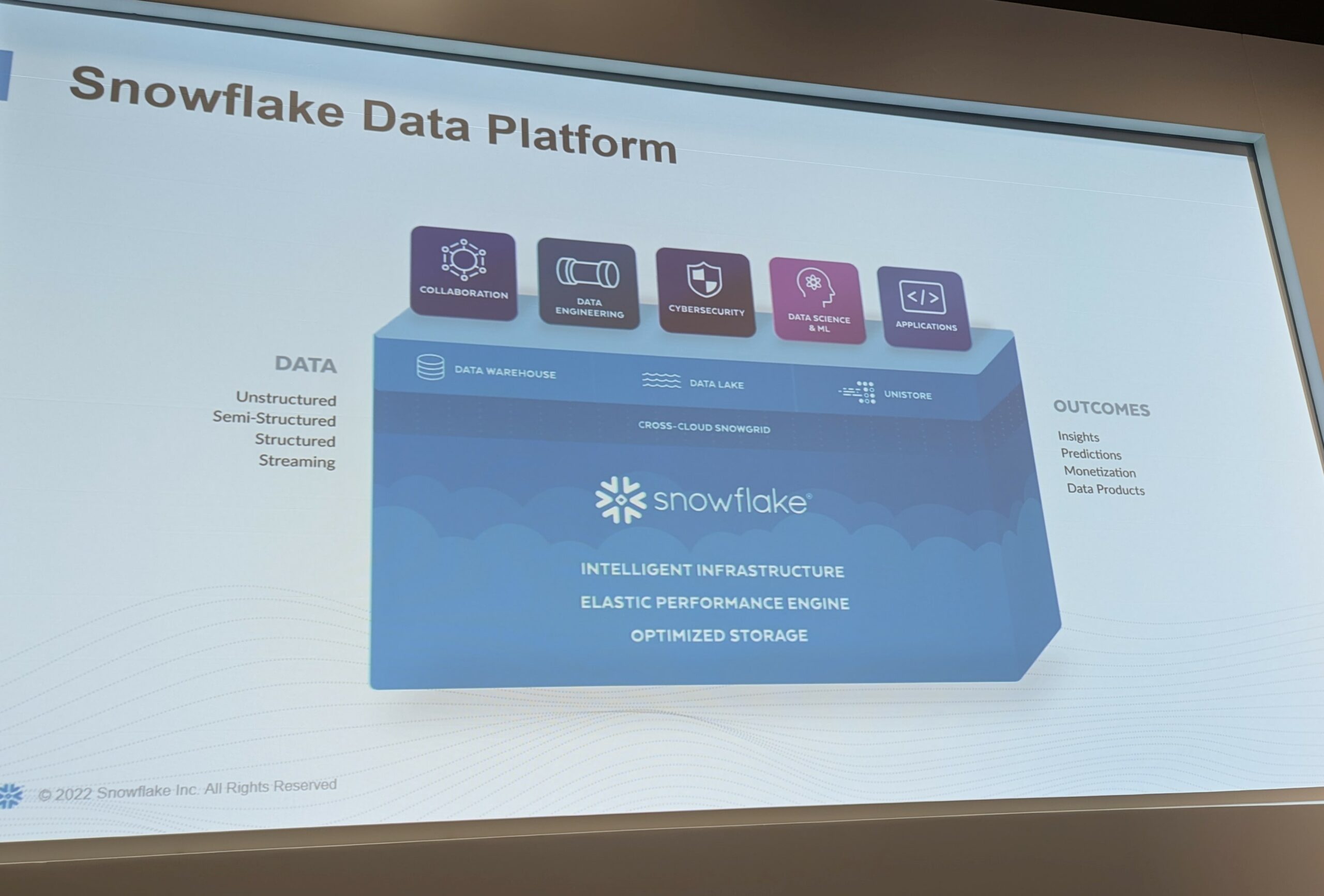
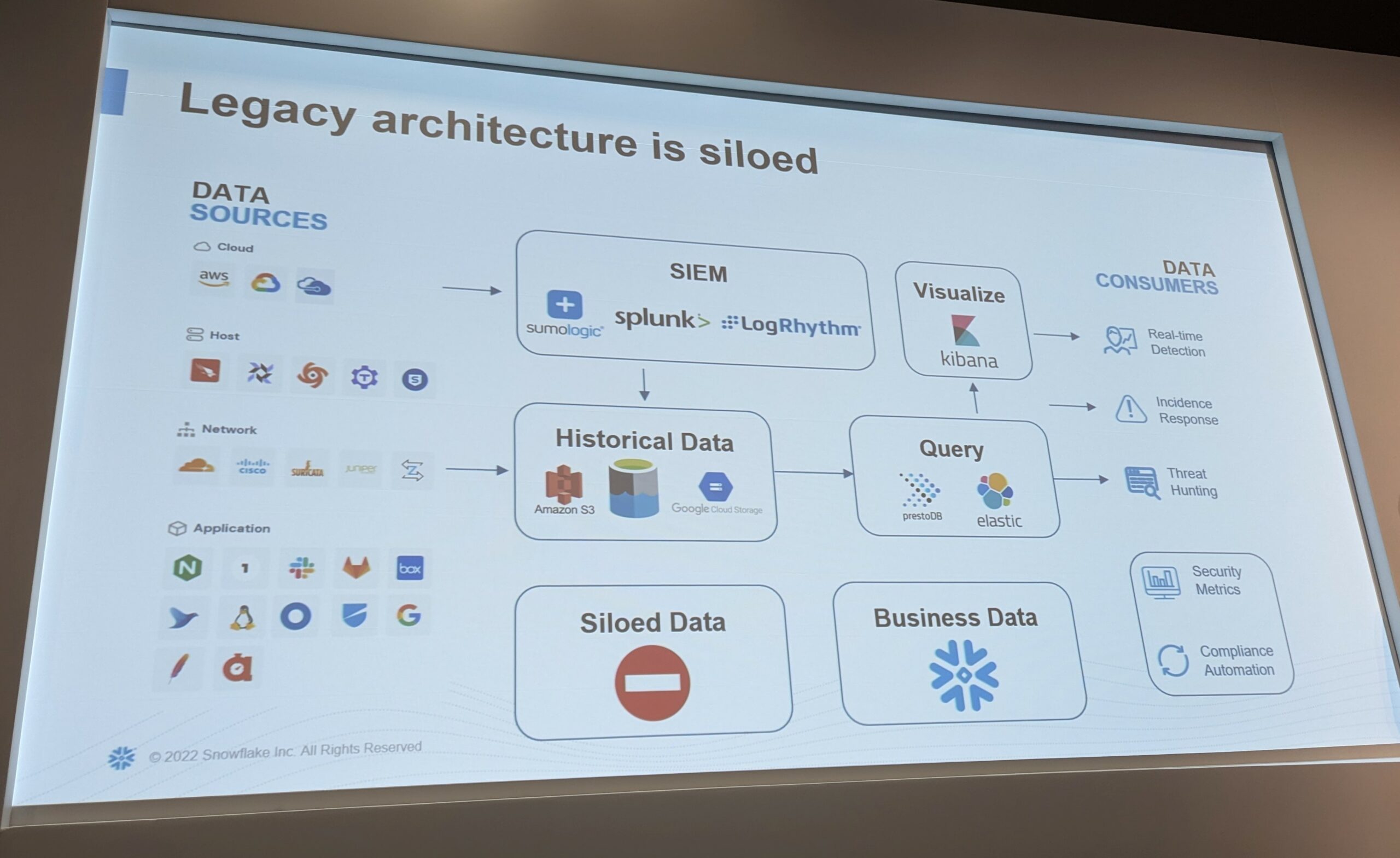
The Image above was in every session I went to and is obviously the main push.
In fact the only part that made me roll my eyes a tiny bit was the inevitable push into applications, as it seems that every company that has a good product always seems to have half an eye on the huge fortune Apple made on phone apps, and are just waiting for a chance to shoe horn applications into their offering, well we will see if snowflake is any different,
On the individual sessions, all the ones I went to were excellent, following the tried and tested method of having “tracks” so you did not get many conflicts on what you wanted to go to, most of them were driven by actual snowflake people. It wasn’t the same diversity and partner driven sessions that I am used to with some of the vendors like IBM or Salesforce, but I learned a lot so have no complaints
Presentation equipment was again excellent, I am seeing this as a previous speaker myself with uber bright projectors, everyone had nice clear mics you could hear from everywhere in the room.
Top feature of the whole day I have to say was my snowflake contact “Ben”, who identified me as I passed the main stall with a frown on my face, he must have had a list of about 1000 people to keep an eye out for, and to identify one of us who he has only met once, in a crowd to say hello, wins huge brownie points.
Time wise. Other than the sessions I managed to rip the heart out of everything I needed in about three hours, and went away very satisfied and determined to go back to the next one, I’m not a snowflake evangelist, so I’m not going to get over excited about anything, however I went there with a list of questions from my colleagues, a list of questions myself, and a set of future plans I needed to cater to.
I went away with everything I wanted answered, and with a plan of action, so everything you could want in a day conference 3.
Food catered for every dietary need and quibble, particularly for me, as no one seemed to want the vegan burritos so I was able to eat so many that I waddled and filled up on good coffee, Nice.
One of the most popular freebees on the partner floor was the free crane.
The same I visited for the Pokémon World championships last month[↩]
but i did hear that a lot of conferences are like this as they are feeling there way back after the Pandemic[↩]
Longer ones have a whole social thing going for them but that is a whole separate game[↩]