My one thought piece on AI


This is going to be my one post on the place of AI and my opinions on how we are handling it in business and life.

AI. It’s been the big talking point for the last year or so and is still a front page topic. is it going to take all our jobs, spark a revolution, or create new opportunities? At first glance, AI does look like another seismic shift akin to the sewing machine, mechanised loom, or Ford’s production line. But there’s something fundamentally different about this wave.

Unlike past revolutions, AI doesn’t seem primed to create jobs at scale. It won’t spawn entirely new industries in the same way we’ve seen before. Instead, we’re likely looking at significant genuine job losses, particularly among lower-level white-collar roles.

In the Short-term, we’ll see disruptions as many companies will eagerly adopt AI to reduce costs and boost productivity quickly. But that’s where things get tricky as in doing that a certain way, you strip the long term growth out of your own company.

Lets take my own career as a technical PM. My effectiveness in this role comes directly from the breadth of my experience, having worked my way up through the lower level roles that AI now threatens. When I meet fellow managers lacking that foundational experience, their narrow perspectives are glaringly obvious. They struggle because they lack the hands-on knowledge gained from climbing the career ladder step by step.

If we let AI sweep away lower-end roles entirely, the future leaders and decision-makers won’t just lack depth; they’ll be missing the creative problem-solving skills developed by working through small, varied challenges. AI excels at averaging human outputs, but brilliance and breakthroughs often come from the “odd ones out,” those uniquely creative individuals whose careers and ideas evolve slowly over time.

Companies adopting wholesale AI driven job cuts might thrive briefly, lowering costs and increasing productivity, but will inevitably pay a steep price down the road. In five to ten years, we’ll experience a severe creativity and skill gap, causing real damage.

So what should sane businesses do instead? Integrate AI subtly and strategically. Take insurance claims, for example. AI excels at quickly identifying suspicious claims, far better than most humans on first initial checks, which means claim handlers don’t waste so much time sifting through genuine claims and can concentrate on the ones with a higher probability of being fraudulent. Leveraging AI in such a supportive way, rather than broadly replacing roles, allows businesses to boost efficiency without sacrificing human development.

This issue is particularly stark in creative industries. Jobs like artists, video editors, and audio engineers may seem like a good idea to replace with AI as it can theoretically turn an inexact set of processes into ones that can be managed precisely. But losing these foundational roles to AI doesn’t merely eliminate positions; it stifles future creativity. Rebuilding lost creative foundations is far more challenging than retraining white-collar workers. So, personally, while I use AI to eliminate tedious tasks,

I consciously avoid AI-generated creative content. Supporting human creativity, rather than replacing it, is critical.

How, then, do we roll with integrating with AI as individuals? I think back to my first corporate role during university placement, at the dawn of outsourcing to the Indian subcontinent. Everyone worried about job security. but a network technician named Richard Nixon told me simply: “Make sure you’re worth your money.” and that is how we should look at ourselves.

AI isn’t free, it’s a business tool, and companies providing AI will profit significantly. But AI has inherent limitations. The key is identifying human-specific strengths, intuition, flexibility, emotional intelligence, nuanced communication, and emphasising those. Managers seeking immediate cost savings might underestimate these qualities initially, but they’ll soon miss the critical human elements that AI can’t replicate 1.

AI, despite its capabilities, struggles to navigate human subtleties: body language, tone, persuasion, and ethical gray areas. These interactions are precisely where humans excel and prove their irreplaceable value.

Ultimately, AI is a remarkable tool, indeed it could be one of the greatest tools humanity ever creates, and if used thoughtfully, it will enhance human capabilities massively. But if handled recklessly, focusing solely on short-term gains, the long-term costs could be a right cluster f**k.

  1. Well not currently[]

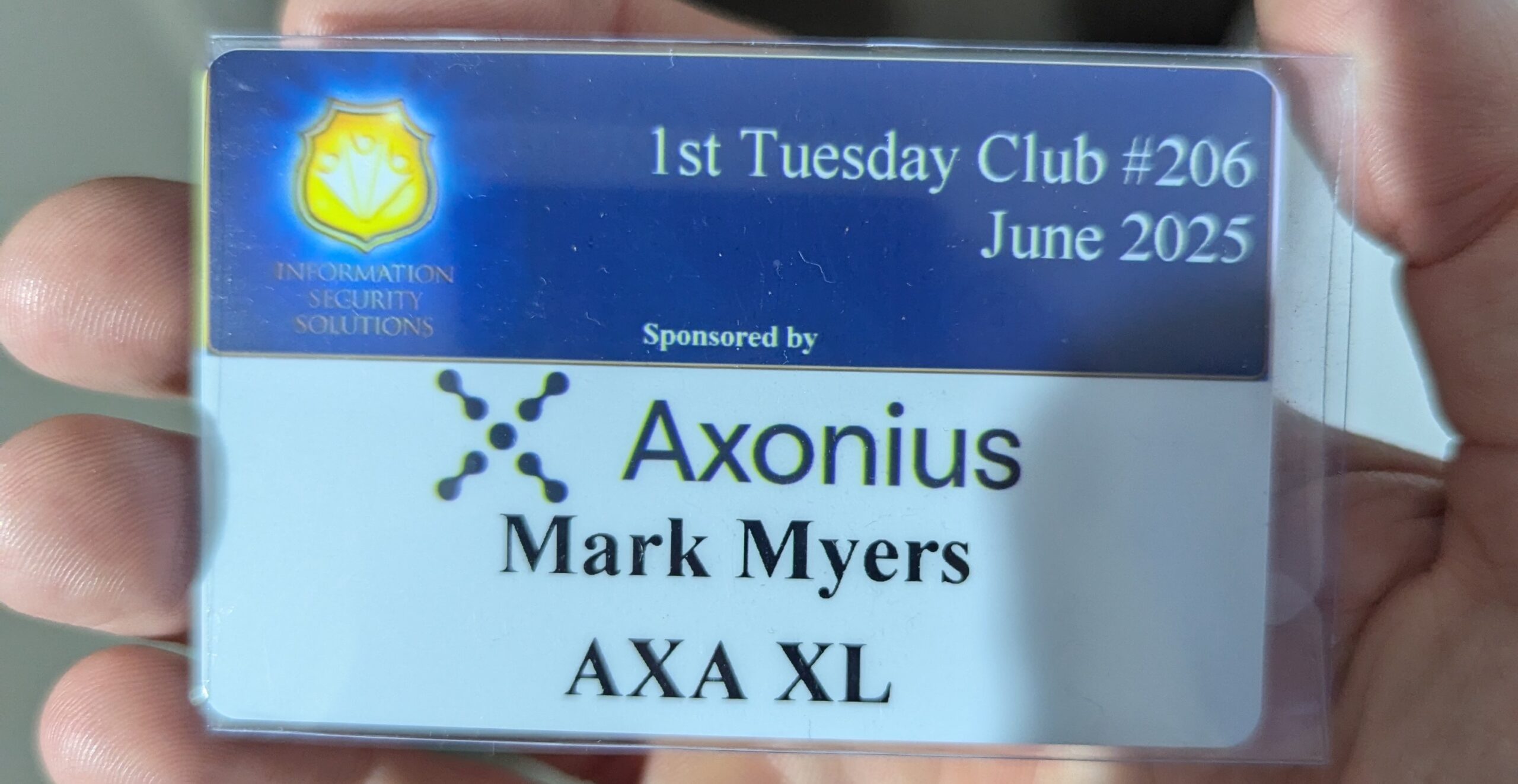
Information Security Solutions 1st Tuesday Club – June 2025

Every time I attend the First Tuesday Club, I find myself wondering why I don’t make it a monthly priority. With ever-flowing drinks, fantastic food, and great company, it’s genuinely puzzling that it isn’t permanently fixed in my diary. But such is the nature of the corporate frenzy; we often take such opportunities for granted.

I found the atmosphere as welcoming as ever. The gathering typically hosts around 80 to 100 attendees, a solid mix of familiar faces and new introductions. It’s always nice catching up, exchanging insights, and sharing anecdotes, particularly about the ongoing adventures in the security field. This night is one of those rare places where professionals can relax, share openly 1, and feel genuinely supported amidst the relentless security battles we all face.

Mr. and Mrs. Sutherland were there as always, a consistent presence over many years, this time introducing their daughter, a fab moment that made me feel somewhat ancient but also hopeful seeing a new generation stepping forward. As always, the evening featured a fantastic spread, perfectly balancing a comfortable atmosphere with just enough corporate sponsorship to ensure everything was covered.

This particular event was sponsored by Axonius , an impressive company whose services seem like an excellent fit for one of my clients. I had an interesting and no-pressure conversation with one of their team members. Rather than heavy-handed selling, the representatives casually mingled and engaged naturally with attendees, meaning that everything stayed nice and relaxed.

The First Tuesday Club has been a valuable part of my professional life for decades. Each visit reinforces why I value it so highly. I’m introducing a new colleague to it next month, hoping they find as much value and enjoyment in it as I have. In a world where cybersecurity challenges grow increasingly complex, having a place like the First Tuesday Club, where learning and networking occur in a stress-free environment, is more important than ever.

  1. within the bounds of client confidentiality, of course[]

Warhammer 40K Squat knights: Squat Juggernauts

Full credit to OldenDemon for this one, and his videos on the history of 40K Epic Knights

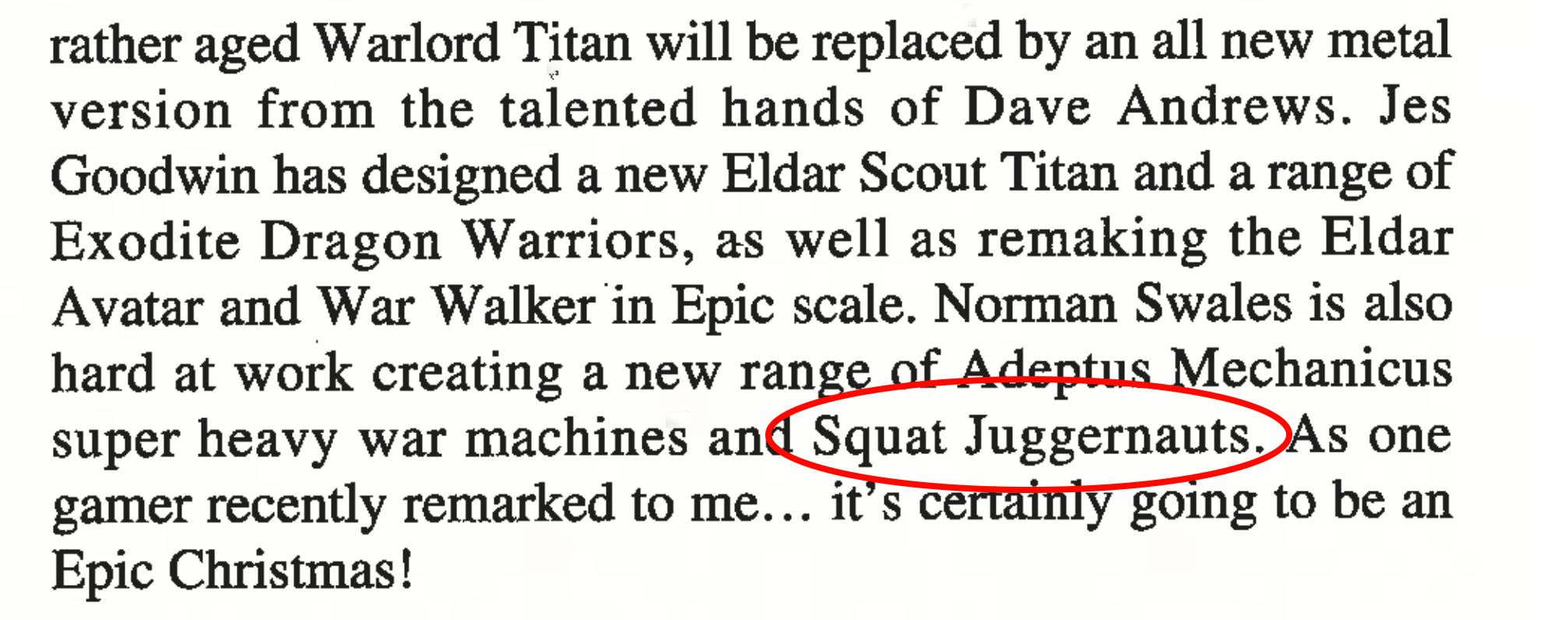
So in White Dwarf 178 – Page 12 it actually gives a name to what, in context, would be the equivalent to Squat Knights: “Squat Juggernauts”, no further details were ever provided, but it’s the nearest we have ever had, and I’m going to go with it.


Corporate term: “Fundamental”

Definition:

Fundamental: A non-accusatory term describing something implemented only at its bare functional level, but not yet properly completed or robust.

Explanation:

The term “fundamental” refers to systems, processes, or features implemented minimally to meet an immediate project deadline or delivery requirement but not subsequently refined or completed to a sustainable standard.

Although functional, these fundamentals often lack essential attributes such as comprehensive documentation, support infrastructure, or operational resilience.

Common examples include:

  • Software: implemented without proper support teams or documentation.
  • Network features: implemented but still requiring significant manual intervention and maintenance.
  • Business processes: heavily reliant on a single individual’s specialised knowledge, creating vulnerability due to lack of redundancy.

Using the term “fundamental” avoids assigning blame while clearly highlighting the importance of addressing the unfinished aspects. It implicitly communicates to management that such tasks are critical for long-term operational efficiency.

Completing fundamentals not only reduces business and technical debt but also significantly lowers operational risks and ongoing resource overhead.

Although refining existing fundamentals might appear less exciting compared to pursuing new initiatives, the long-term benefits, such as freeing resources and reducing risk, substantially enhance organisational capacity for future projects.


Disclaimer: As always these posts are not aimed at anyone client or employer and are just my personal observations over a lifetime of dealing with both management and frontline associates.


Corporate term: “War list”

Definition:

A war list is an informal term for a concise list of priority items used when a project is starting to spiral slightly out of control. It is most commonly employed by a task force.

Explanation:

A War List, often just a single-sheet on an Excel file, might initially start as a very long list of all the things that need attention on a project. However, it is the project manager’s responsibility to organise and prioritise this list, transforming it into a structured “order of march.”
The War List differs from a regular task list because it is typically managed manually, frequently updated by the project manager themselves in a spreadsheet. It serves as their personal working document to track and manage tasks. While other team members are not expected to update this list directly, it remains accessible as a constant, living reference for the team.

Disclaimer: As always these posts are not aimed at anyone client or employer and are just my personal observations over a lifetime of dealing with both management and frontline associates.