Starting a conversation in a corporate chat client effectively is crucial nowadays, especially with the widespread use of chat platforms like Teams and Google Chat. These tools can be incredibly helpful but also frustrating if not used properly. One of the biggest pitfalls is failing to start a message in a way that does not trigger a negative response.
When beginning a chat, start with a simple greeting, a brief mention of the topic, and what you hope to achieve from the conversation.
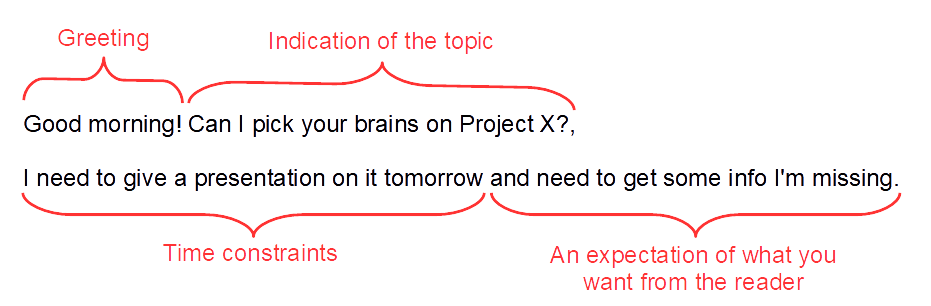
This approach is straightforward but very effective. For example: “Good morning! Can I pick your brains on Project X?, I need to give a presentation on it tomorrow, and I’m after some info I am missing.” This includes a greeting, an indication of the topic, and sets expectations and time constraints—all in a single sentence.
This structure helps others gauge the priority of your message and reduces any confusion.
In addition, avoid vague or overly chatty openers, like “Good morning. How are you today?” spread across multiple lines, which leaves the recipient wondering what you need and also frustrated, especially if you are a slow typer or expecting responses.
Finally, try to avoid abrupt messages that skip all courtesy, such as jumping straight to “Is System X down?” While this may be acceptable in urgent situations like outages, omitting basic courtesies in routine requests (like “Is Report X ready for next week’s meeting?”) can come across as rude and dismissive.
This year has been without a doubt one of the most satisfying ones of my life, personally and professionally, A solid year all around. Let’s, as normal break it down, then talk about 2025
Work and Professional Growth
On the work side, I’ve achieved a large percentage of what I wanted. Im very happy to be away from under the faceless control of the human resources machine and back to being a genuine consultant in a small dynamic company fixing larger corporate issues.
My clients seem to be really happy with what I’m doing for them, and I’ve enjoyed the most positive new working relationship I’ve had in a decade. It feels like I’ve transitioned from being a “contractor” to being recognised as part of a genuine vendor, which is a significant step forward.
The daily work itself has been both challenging and incredibly fulfilling. That makes all the difference. It’s not always easy, but it’s always worth it.
On the management side, I’ve learnt a lot. For years I’ve thought of myself as “a tech person who does some management.” But now, I’m fully embracing a dual identity: a manager who deeply understands technology and the business. It’s a shift that has required growth and adaptation, but I’m leaning into it (see, I’m even using management phrases).
This year, I’ve also had the unique opportunity to observe and learn from a wide spectrum of project managers across a multinational organisation from the inside and finally see what drives them to do the things that seem so insane from the outside. The contrasts have been eye-opening. Seeing the range of styles and approaches has taught me lessons every single day.
Personal Life
On the personal front, this year has been full of joy. One of the biggest highlights? Reuniting with my son in a proper way. Watching him thrive and get engaged to an absolutely wonderful person has been a source of immense pride and happiness.
For the first time in over a decade, we’re celebrating Christmas together, three generations under one roof. That’s a moment I’ve dreamed of for years.
Health wise, things are stable. My lungs, which have been a longstanding issue, are under control thanks to excellent care and support, and though there has been little growth, I dont feel much older.
What are the goals for 2025
I want to focus on growing my management skills. GOOD management has far more to it than most people actually do. People assume that once they’ve earned a managerial title, they’ve mastered the art. That’s far from true.
Just like in any profession, growth in management is a continuous journey. This year, my goal is to improve by doing, learning from hands on experiences rather than formalised programs.
I’m fortunate to have a couple of significant projects lined up, and I’m determined to deliver them as things of grace and beauty. Alongside this, I need to keep up with my knowledge in business and the tech side.
Admittedly, 2024 was quieter on the business knowledge side with how busy its been, so this year I plan to dive back into my Chartered Insurance Institute exams and get at least a few of them taken.
On the technology side, my main clients are heavily Azure focused, so staying current in that area is non negotiable. Thankfully, I’ve been lucky to work with colleagues who, because I approach them with respect, are patient and willing to share their more up to date knowledge. This collaboration has been an incredible learning experience.
On the personal side, one goal I’ve repeatedly set (and neglected) is returning to fencing. This time, I’m determined. Haverstock fencing club has added Saturday sessions, making it much easier to commit to regular practice.
Another priority is addressing a new back problem, which stems from years of sitting at a computer. Thankfully, my fantastic personal trainer is guiding me through this, helping me strengthen my body and alleviate the issue.
This year also marks my 50th birthday, and I’m determined to get my weight down to 100 kilograms. It’s not just about the number; it’s about not looking like an old fart at the parties this year.
Lastly, I want to actually get a grip on the model painting. I’ve spent too much time procrastinating and pottering around rather than doing. This year, I’ll focus on actually painting a few armies, running a few campaigns, and playing some actual games.
As someone who paints mainly Warhammer miniatures, I often paint in what’s known as “Grimdark” style. This term applies both to the narrative (“In the grim, dark future, there is only war”) and to the painting style itself, which emphasises a gritty, weathered look with battle damage and grime.
Within grimdark, there’s a spectrum, from simply shadowed effects just using things like “Nuln Oil” shading, to the intense enamel painting that embodies the full “Grimdark” experience that you see with Kendon Oates work.
But I’ve always been curious about the opposite of this style: that bright, clean, shiny 80’s aesthetic seen in settings like Star Trek and exemplified in Corvus Belli promotion pictures. 1
I recently discovered that the narrative name for this is “hope punk”. Settings like Star Wars and Star Trek fall into this category, but I could never find a painting equivalent or good guides on achieving such a look. Thankfully, I’ve recently found both.
And while I’m not completely satisfied with the term 2, “iPod Future” seems to fit: it’s that sleek, chrome, brand-new world look I was after.
As for guides, there were many subpar resources, but Corvus Belli came to the rescue for a formal book, specifically through Angel Giraldez’s Masterclass Volumes 1 and 2 3.
Some key features that distinguish “iPod Future” from “Grimdark” are:
Glazing with lighter colours instead of dark tones.
Highlighting up to near-white layered highlights.
Using coloured washes instead of traditional dark shades.
So there you go, hope this helps someone else on the same search as me, I finish with a definition of “iPod Future painting” : “It’s a nightmare realm of none metallic metals, glazes, and prodigious tactical use of off-whites and pure whites to create lens flare effects.”
I used a couple of them for the banner of this post.[↩]
I’ve noticed something recently, and its finance wrecking projects. Now, don’t get me wrong, finance teams are just doing their jobs, safeguarding budgets, managing risk, and all that good stuff. But occasionally, their well-intentioned actions can inadvertently turn projects into grey mush.
This is because there’s been a big push lately towards goal-based deliverables, essentially fixed-price projects under a fancy new name. On the surface, this sounds sensible: clear expectations, predictable costs.
But what often gets bundled into these contracts, thanks to diligent finance and legal teams, are penalty clauses, those little contractual bombs that promise severe consequences if deliverables aren’t met.
The idea makes sense in theory: if a vendor doesn’t meet expectations, they face penalties. But in practice, it’s often a nightmare. Vendors, already feeling stressed from fixed-price constraints, become understandably cautious, even penny-pinching.
Every extra detail, every moment of generosity, or even a minor freebie given to clients becomes a direct hit to their bottom line. Add in severe penalty clauses (sometimes, unbelievably, with unlimited financial exposure), and vendors start playing defence.
The outcome? Projects shift from being innovative and collaborative efforts to a game of “minimum viable product.” Every potential corner is cut, flair and creativity vanish, and teams deliver just enough to fulfill the contractual obligations, nothing more. The joy, enthusiasm, and innovative spark that can differentiate groundbreaking projects from merely adequate ones are often lost.
From a client’s perspective, this cautious approach is problematic. Companies typically outsource projects precisely because they lack the internal expertise or resources, so it makes sense to leverage the specialist skills of vendors. By introducing overly harsh and rigid contractual conditions, clients unintentionally stifle the very expertise they’re paying for. Opportunities to create truly differentiated, standout products vanish.
And here’s the irony: being overly cautious and protective financially might safeguard budgets, but it can also rob clients of the chance to genuinely innovate or take the lead in their market. Instead of getting a product that could have been the best in class, they settle for something safe, predictable, and frankly, dull, often making the project a waste of money, as you could have just stuck with what you had.
Fiscal responsibility is essential, but perhaps balance caution with courage and encourage your vendors enough freedom to deliver excellence, not just adequacy.
Every project faces moments when progress slows or comes to a standstill. At these critical points, senior managers and directors have an essential role to play in genuinely providing solutions. However, the approach they choose to take can either resolve the issue or just make it more complex for the rest of the teams.
Having done the whole senior management thing myself 1, I noticed a common pitfall: managers mistakenly believe that simply escalating an issue or demanding results equates to genuine assistance.
Due to their authoritative roles, senior management involvement is often immediately noticed and acted upon, but this can mislead them into thinking their mere presence or directive is helpful. In reality, merely escalating issues without offering tangible solutions frequently “robs Peter to pay Paul,” solving one issue temporarily but creating another elsewhere.
So, what does genuine help from senior management look like?
Provide Real Additional Resources: Effective intervention often requires additional resources. Crucially, this doesn’t mean reallocating existing staff or resources but genuinely investing in new resources, such as hiring additional personnel, acquiring necessary tools, or making strategic investments.
Unfortunately for managers, genuine assistance often comes in the form of increased budgets or funding to support urgent needs 2.
Offer Broader Perspective and Insight: Senior managers and directors usually have a comprehensive view of the organisation, enabling them to identify solutions or resources that may not be visible to project teams. Sharing knowledge about other teams or departments that can assist or suggesting alternative solutions based on wider organisational insights can be immensely useful and shortcut a lot of problems.
Adjust and Clarify Priorities Thoughtfully: While frequently shifting resources is usually counterproductive, there are strategic exceptions. Occasionally, reducing pressure on one initiative can free up critical capacity to address more pressing issues. This approach, however, must be carefully managed and clearly communicated to avoid confusion or resentment within teams.
Provide Support and Protection: Sometimes, the best assistance senior leaders can offer is protection from external pressures or excessive interference. Shielding project teams from undue scrutiny or conflicting demands allows them to focus clearly on solving critical issues. Effective support might simply mean advocating for more realistic timelines or managing stakeholder expectations more effectively.
In short, effective senior leadership intervention requires more than mere escalation—it requires thoughtful, resourceful, and strategic support. When done correctly, this not only resolves the immediate issues but also strengthens the broader organisational effectiveness, and we don’t end up with a load more tech debt, which messes things up further down the line.
and not enjoyed it half as much as I thought I would[↩]