As happens to all contractors, I have moved from one client to the next.
Obviously, as a member of a specialist consultancy, LDC Via has multiple clients, and we all help each other on them all, but each person tends to have one that occupies more of their attention than the others. and for the last three years, that client for me has been AXA XL.
It is very rare for me to write an end-of-client post, mainly because we tend to return to previous clients multiple times. I have worked with some clients on eight or nine deliverables.
However, I felt like an exception is due this time because it seems as though I have been there for decades, even though it has only been a couple of years, and the reason for that is the people.
AXA XL has a disproportionately large number of genuinely good people.
At the end of any given contract, I will usually have met two or three people I would like to remain friends with and keep as long-term contacts. These are people who have made a genuine difference to my life and with whom I sincerely want to stay in touch.
In the last three years at AXA XL, I have met dozens.
Normally, at the end of a contract, I could call out a few names and say that they were really good people who would remain, as it were, on the Christmas card list. But I could not possibly call out everyone this time. The number of people I have met at AXA XL whom I would like to keep in touch with is so large that thanking them all individually would seem excessive.
It feels particularly jarring because I chose to finish at AXA XL, rather than simply moving on naturally at the end of a project when contractors are removed by a higher decision. I genuinely hope I get the opportunity to work with you lot again.
I have learned so much from so many talented individuals. It has been quite breathtaking.
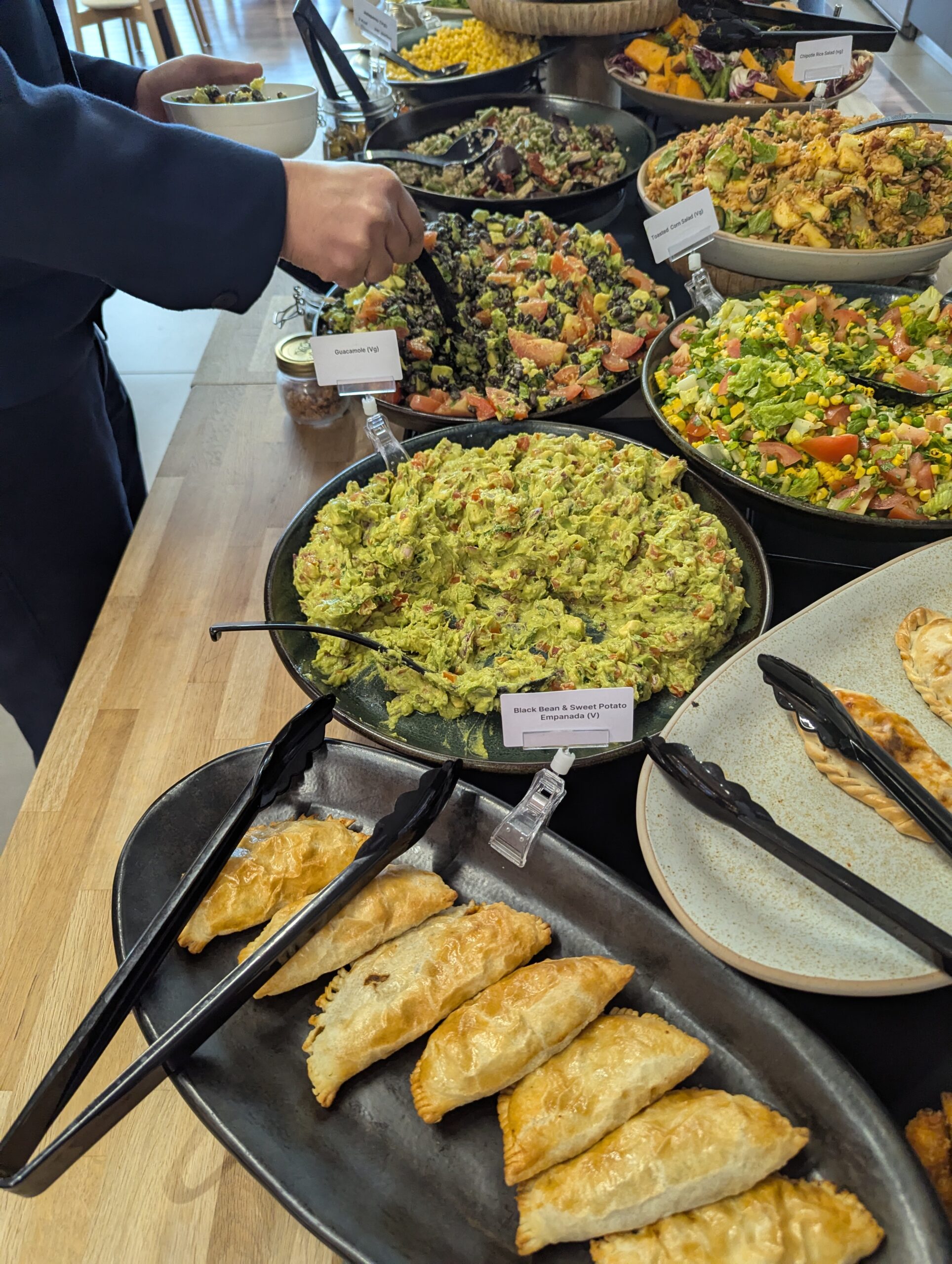
So, thank you all, and thank you for having perhaps the BEST canteen in London.
‘Fast batching’ is a new way of saying ‘scheduled update’.
Explanation
In this world where nearly everything has to be real-time or event-driven, there are still a number of data sources that are primarily used in a scheduled fashion. They might be updated once a day, or sometimes even once a month before reports.
Moving these to an event-driven or polling format can often be very difficult technically, sometimes meaning a complete re-architecting of the solution. So, what tends to happen is that the IT teams underneath them simply turn up the scheduling frequency as high as they reasonably can. This can mean updates every 1 to 15 minutes.
This approach of basically maxing out how frequently you can schedule the updates is often termed “fast batching”.
Disclaimer: As always these posts are not aimed at anyone client or employer and are just my personal observations over a lifetime of dealing with both management and frontline associates.
Playing politics is to say and do things for political reasons, instead of doing what is right or best for the corporation or other people.
Explanation
Right. Okay. This is going to be a long one.
“Playing politics” is a term nearly always used in a negative frame. It is used by nearly all junior people about their bosses, and it is used by bosses about each other, while being categorically denied outright by everyone.
Unfortunately, just because you don’t like the label doesn’t mean you’re not doing it. All of us inside any given corporation do politics because it has a genuine purpose. It is simply that the term now has such a negative framing that everyone will avoid the label.
Most definitions of politics involve a state or country, so you have to go back to the root etymology of the word to make it make sense inside a corporation. One of the earliest meanings is essentially:
“pertaining to or concerning governance”.
That’s it.
So, in your corporate world, politics is when you’re having to deal with the governance of something.
I’m going to include two additional terms because I think they are wrapped up in governance in a corporate environment: ownership and responsibility. 1
So, politics in a corporation is about the governance, responsibility and ownership of something. That’s our hard corporate definition.
Now, if we go back to the “playing” bit: if you do something that is not for the greater good of the corporation and instead provides an advantage to yourself or your department, and the tools you use to do that are governance, ownership and responsibility, then you are playing politics.
TLDR;
Doing politics in a corporation is anything pertaining to or concerning governance, ownership or responsibility of a system or area.
Playing politics in a corporation is “doing politics” but for the advantage of yourself rather than the corporation.
Disclaimer: As always these posts are not aimed at anyone client or employer and are just my personal observations over a lifetime of dealing with both management and frontline associates.
There ARE legal differences between the 3, i.e., ownership tells you who possesses and controls the item. Governance tells you who directs it, and responsibility tells you who takes care of it, but in the vast majority of corporate politicing, they will nearly always boil down to an individual. [↩]
I sometimes do these thought pieces, and I don’t tend to post them professionally, but it’s nice to think about these things. then put them into words to try and make some sense of the world we all live in.
One of the core things that I feel we see at the moment, and which is often very troubling for younger generations, is the question of why everything seems to be getting rotten.
We hear the term enshittification. We see billionaires, and we see that billionaires can never quite get enough. We try to go to “third places” to just be ourselves and enjoy a moment away from constant needs and delivery. Yet a lot of these spaces are now being turned into places where simply being there has to generate constant oppressive revenue.
I believe American bowling alleys are going through something like this. Historically, bowling was something you could budget for. I remember going bowling myself, where you’d expect to pay a reasonable amount, and that would be your Saturday night or your weekday evening.
Now, going to such places can feel like a constant battle over how much more money can be extracted from you. Sitting quietly and talking with friends starts to look, from the business’s point of view, like a wasted opportunity.
You see it all over the place.
Thankfully, people are fighting back. But activities where you would once spend a finite amount of money for a finite amount of enjoyment are being hunted endlessly for additional revenue.
And to what end?
We’ve seen it with things like Dungeons & Dragons. Traditionally, if you played it in a public place, you might pay for a few drinks and perhaps some shared crisps and stuff. The players would bring pens, paper, character sheets, and dice, and that would basically be the whole cost.
But that kind of model increasingly seems unacceptable. If people can continue enjoying something without paying again, somewhere there is a feeling that money has been left on the table.
We see the same thing with films and other media. Increasingly, ownership is replaced by access, and access is replaced by a recurring fee. You do not simply buy something and keep it. You rent permission to use it for a short period of time.
Why?
Where is this going?
I saw a great comedy video recently in which someone was asking:
What are the billionaires doing this for?
You’ve got a billion. You’ve won. Great.
Why are you still doing this?
Why must there always be more?
Where is the goal of contentment?
As someone now in their 50s, I love the internet. I love technology. I love life. But if I were coming into all of this as a much younger person, I would look at what we’ve done to it and be horrified.
We are walking ourselves towards a dystopian world in which more and more of ordinary life is licensed, metered, or rented. Every amusement needs an account. Every convenience has a recurring fee. More and more of what used to be simply yours becomes something you retain only while the payments continue.
I’m in a position to resist some of this.
I have a lot of local media, everything from books to hard drives full of backed-up films, music and other media. I also have the ability to enjoy those things in a home that I have a mortgage on and which, one day, will hopefully be completely mine.
But newer generations are looking at a world where they are increasingly merely renting their existence from incredibly powerful people.
And again, I repeat: why are these incredibly powerful people doing this?
What will they get when they win?
There is nothing they can’t already do. They are already billionaires. They can do practically anything. They can have practically anything.
It is something I genuinely can’t empathise with.
I do not understand the need for it.
And this is coming from somebody who works primarily in the finance industry. I have spent my working life getting financial systems to work with each other, meet goals and support growth. Having lived in the corporate world all my life, I can say that the majority of the corporate world isn’t like this.
There is something dirty somewhere, and it isn’t necessarily in your everyday corporation.
There will be growth goals, yes. There will be targets to meet, yes. There will even be large-scale changes imposed when, quite frankly, things have got out of control or become slack.
I see all of those.
But they are normally pieces of activity with a beginning, a middle, and an end, and there is usually a justification for doing them.
So much of this other stuff, this subscription-based life, and the pollution of everyone’s third places seems to have no end goal.
Other than, perhaps, the complete subjugation of absolutely everybody apart from a tiny number of people.
But even then, I know some rich people and when I talk to them, they’re not after this either.
So why are we doing it?
I once had a client where all the individual people were really nice people, but cumulatively they did terrible things to each other. Not even to their customers, just to each other. It was as if there was a never-ending grind to make everything worse and everything more painful.
Yet if you talked to any individual person, they would think you were mad.
“Of course we’re not doing that.”
And individually, they weren’t.
But cumulatively, somehow, they were.
That is what this increasingly feels like.
No single person necessarily sets out to turn life into an endless series of fees. But every organisation looks for one more revenue stream or opportunity to capture value. And when you add all of those reasonable-looking decisions together, you end up with something deeply poisonous.
It’s something I try to fight against and help people with as an individual, and I think we all have to do that.
I’ve reached the time of life where people can quite reasonably say, “Oh yes, you’re just talking about the good old days.”
But some parts of the good old days genuinely do need to be recovered.
A pub must be able to exist with overheads low enough that every moment one of its patrons isn’t throwing down a massively expensive drink and immediately ordering another isn’t treated as a financial failure.
It shouldn’t need to constantly squeeze people simply to cover its overheads.
It’s something that confuses me, and it’s something I watch.
As an individual, my only real action is to support the places, companies, and groups that pull back from this, even slightly.
If I see a third place where the model is simply that you can come in, do your thing, pay a reasonable fixed price, and leave, I will support it.
If I see a company selling a product where the model is simply that they make something, you purchase it, and you can then use it reasonably without an ongoing financial relationship, I will support that too.
We have to fight back against the idea that every part of life should become a recurring revenue stream.
And I think the best way most of us can do that is to look for the companies and places that are trying to do things differently.
Support them and fight against becoming merely a subscription.
Like many geeks, I do tabletop modeling. I play with “war dollies”. And if you are in England, the most common and biggest company for this hobby is Warhammer. 1 They produce quite frankly amazing models at a constant rate with lots of changes to rules to keep you engaged, and they make tons of money. 2
But at the ground root level, they are facing challenges, not so much in their product but in their stores. This has particularly shown up in London with the introduction of an Element Games store about an 8-minute walk away; this means that when you visit both, you realize why Warhammer, as a store, has stopped being a third place.
Let me explain, starting with one definition of a third place:
“Karen Christensen argues that third places are the answer to loneliness, political polarization, and climate resilience.”
For nerds, third places are very, very important because they tend not to be fantastically social, and they want to go somewhere where everyone knows their name, and they’re always glad they came, somewhere where there’s their own kind of people, and they can be social in a relaxed environment. However, if you go into a modern Warhammer store, it’s not that anymore. It’s an Apple store. It’s a showroom. It’s a gateway to get people to buy their first boxes. Their stock isn’t even as good as the third-party supplier because of the way they have to present things. Everything has to be facing forward, so it’s easy to see and easy to sell.
Whereas often, when a geek wants to go and buy something, they either know exactly what they’re going for, or they want to browse existing stuff like you browse a secondhand bookstore, and that third place experience, where you go in and chatter to people and lounge around and rummage through new stuff, is what geek stores need to be if you want to obtain that third space feeling.
If that’s not what Warhammer wants. That’s fine. They’re making billions, and they will continue to make billions as long as they make good models and good games. But you can’t have everything. Go into a Warhammer store and look at it. Where could I sit down? Could I see myself chatting for an hour in here? No, I could not. It’s somewhere where I could ask a question, where someone knowledgeable will give me a quick answer and point me gently towards the till.
This is in complete contrast to the big “Warhammer World” headquarters in Nottingham, and this is often where I wonder whether the Games Workshop big wigs get it wrong. They will look around their huge area and say, “Well, this is a perfect safe space for geeks; we know how to order a store.” Yes, because you’ve managed to retain a whole separate area that is a third place where people can eat, drink, chat, and play. You have removed that third place from your retail shops, turning them into a polished money machine, and the third-party suppliers have stepped in.
So. At the moment, Warhammer is a corporate supplier who have showrooms, and as long as they miss the third space need, then the third-party shops will outsell them.