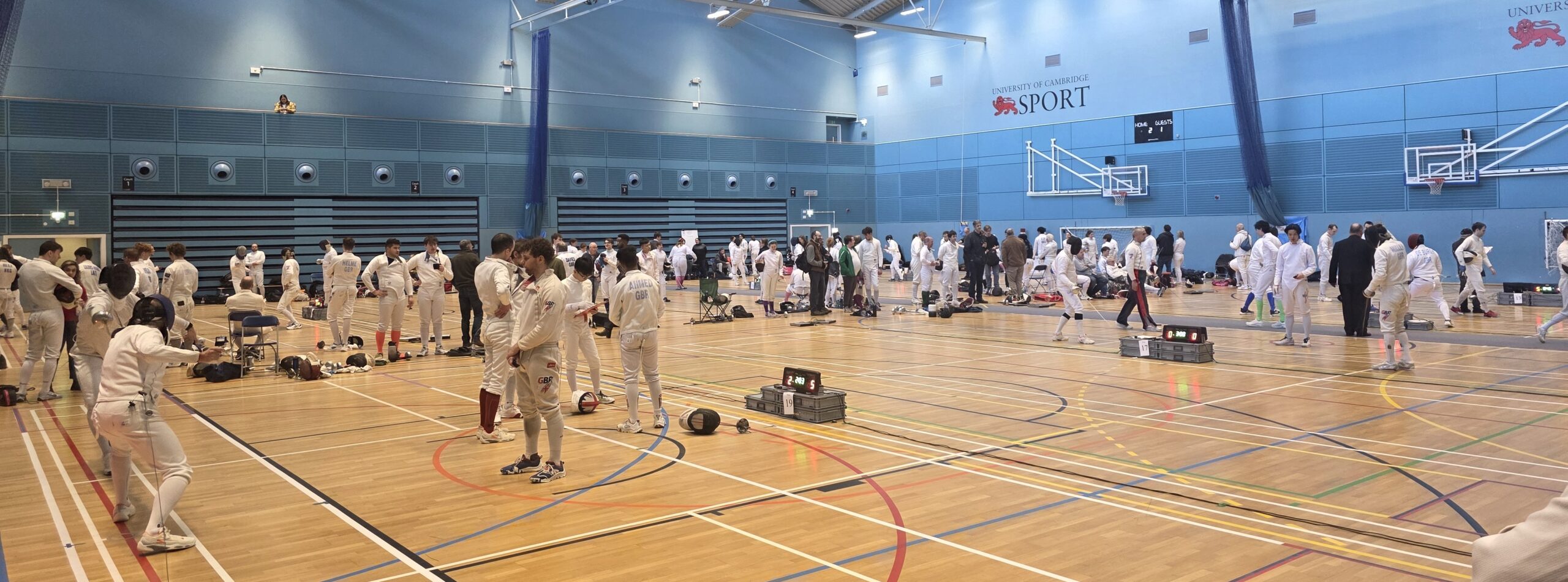
I’m back at fencing far more regularly than I have been for ages. As you know, I’ve been doing it on and off, but I’m now really trying to get back into it, enter competitions and do all that kind of jazz.
I’ve had a really, really good time working with a new coach, who has helped me identify the core things that are wrong with my fencing. All the really good fencing instructors I’ve had over the years have already known these things, but this is more a case of properly identifying and understanding them inside my tiny mind. I’m also adding one of my own.
So, what is wrong with my fencing?
1. My sword-arm shoulder
I tense up and use my shoulder when I should use fingers and wrist. This also means I start to hunch over like Igor. which makes my aim even worse.
How will I fix that? Practice and repetition with a target board.
I already have the timing and scoring kit I got for my birthday, so I practise for a minute at a time. Tap, tap, tap, tap. I need to keep practising until my arm is strong enough and my shoulder is relaxed enough to do it for a full minute without starting to hunch and use my shoulder for every movement.
2. I don’t sit down properly
I don’t move properly because I don’t sit down properly over my back leg.
Again, this is a bad habit I’ve had for ages, but it is now easy to identify and is another straightforward issue that can be improved through strength and repetition.
I don’t even need other fencers to work on it. Squats, skipping and all that kind of stuff will help me become strong enough to fence with my knees bent and my pelvis level.
This was a strange one because I had already partly recognised it, but I hadn’t really believed it. But when I injured my leg, I couldn’t put much weight on my front leg. which meant during practice I had to put most of my weight on the back leg.
Suddenly, my aim improved ten-thousandfold, which was highly embarrassing. Imagine becoming better at fencing when one of your legs doesn’t work.
3. Distance and timing
Yes, distance and timing is an incredibly broad area.
But it turns out I only have two brain cells.
I have a slow brain cell that knows what it is doing when I practise. I also have a fast brain cell that handles instant reactions.
Unfortunately, my fast brain cell is hardwired to perform only a few actions. That is why I am easy to fool and easy to draw into reacting.
I don’t mind that. What I have to do is reteach my fast brain cell some of the things that my slow brain cell already understands.
Again, this is purely repetition and practice. I might not even need other fencers to do it. I need to practise distance and repeat the correct movements until my fast brain cell performs them automatically instead of returning to the same old bad habits whenever I get flustered.
4. Fencing must not become a chore
This is the one I have only just properly realised.
If I treat all of this as work, I will stop going fencing again.
I have enough chores and work in the rest of my life. My hobby does not need to become another one.
If the choice is between relaxing, having fun and enjoying my fencing while losing, or sitting there like a muggins, stressing over everything, taking it far too seriously and winning, I prefer to just lose.
I’m going to enjoy myself and try to fix one thing at a time.