A Healthier Alternative: Finding the Right Energy Drink for Long-Term Wellness

For those familiar with my past posts, you’ll know I’ve been engaged in a long-running search for a reliable, effective, and healthier energy drink. The goal has always been the same: to find a product that provides a genuine energy boost without triggering any long-term health issues caused by overdosing on B6 vitamins, apparently this is particularly an issue for those of us over the age of 40.

Over the years, I’ve trialed a wide range of options: from powdered “gamer” formulas carbonated with a SodaStream, through all the “natural” energy products, to every mainstream energy drink on the market. My motivation? To avoid relying on Red Bull and its many imitators.

Revisiting Brite.

Among the many products I’ve tested, Brite stands out as one I’ve returned to repeatedly. It has undergone various iterations over time, from an unappealing but effective green formula prone to spoilage, to its current lightly carbonated canned form. While the newer versions aren’t my favourite in terms of taste, 1 they do have all the right ingredients and do the job nicely.

This return to Brite coincided with my wife reviewing the nutritional content of the energy drinks that she found in our cupboards. Her findings highlighted some serious concerns regarding long-term health risks, particularly the neurological ones associated with frequent consumption, especially in older individuals. This prompted a renewed focus on finding a safer, cleaner solution.

Prior to this I had been drinking a mix of MOJO’s Extra Ginger shot and Wrath’s performance formula. While effective, the wrath powder ingredients did not bring joy to my better half’s life.

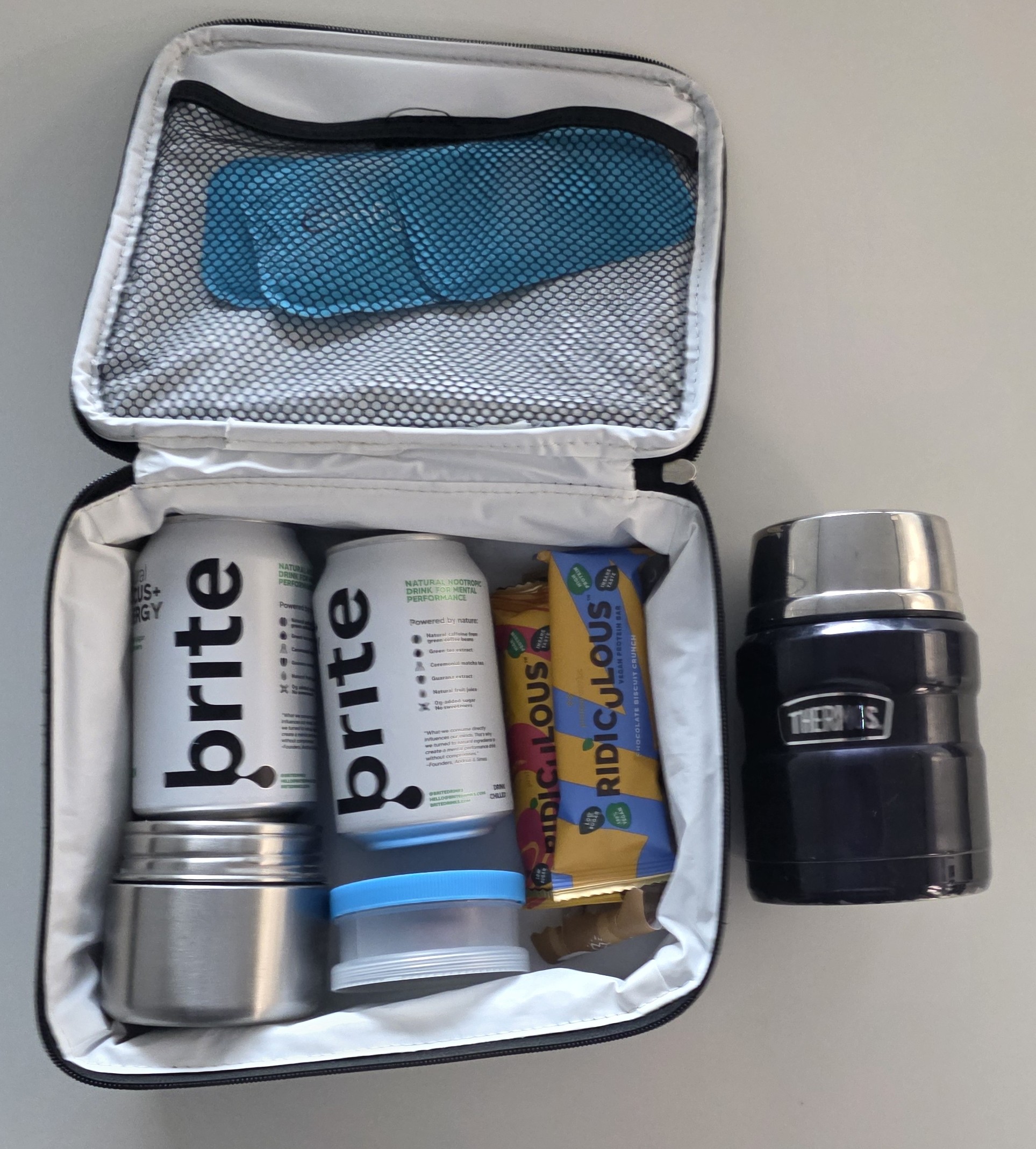
Eventually, I found an effective compromise: a combination of Brite (lemon & lime or raspberry flavours taste best in my opinion) with a shot of Extra Ginger from MOJO. This blend delivers a clean, sustained energy boost with the added benefits and taste of ginger.

Why This cocktail Works for me

  • The non-synthetic caffeine and matcha content delivers alertness without being hyper.
  • The Ginger adds natural anti-inflammatory effects (good for the guts of an old man) and a sharp, refreshing taste, which helps replace the need for tonnes of sugar.
  • Both Bright’s and MOJO’s formulations are relatively organic and free from synthetic components
  • Both companies do a good subscription service that provides a discount
  • It just tastes good and wakes me up.

While it’s slightly more expensive than typical off-the-shelf options (such as lower-end supermarket brands), the increased cost is justified by its higher-quality ingredients and reduced health risk.

  1. something that can’t be helped given the much lower sugar content,[]

The undervalued skill of doing your own footwork as a Project Manager


In the world of project management, we often focus on timelines, budgets, and stakeholder communication. However, there’s one critical skill that frequently gets overlooked:

The ability to do your own footwork and status checking. When you can independently investigate, gather insights, and verify information, you become far more effective in your role and less of a burden to your team.

As a project manager, you should be able to:

  • Track and raise issues and tickets with whatever system your client uses (ServiceNow or what have you).
  • Track sprints and work allocations in Jira (or any other tool) for any team, not just your own.
  • Review automated business process statuses (success or failure) after a new release goes live.
  • Understand logs at a high level, even if you’re not the one managing a system.

You might not need to dig into every technical detail (like sifting through Apache logs), but you should know where to look and what to look for.

Most modern project management and cloud-based tools offer robust logging, reporting, and monitoring features. If you have the right access, you can keep tabs on your project without constantly interrupting your team.


How Research Skills Make You a Better Leader

Stay Informed

Having the ability to quickly pull reports or check logs means you’ll have a real-time understanding of your project’s status. You’ll be the first to notice if something looks off, which gives you a chance to investigate further and proactively address issues.

Avoid Getting Deceived

When you rely solely on others to inform you of problems or progress, you risk missing critical details. By verifying information yourself, you’ll be much harder to mislead, intentionally or unintentionally.

Ask Better Questions

Instead of starting a daily stand-up or group chat with, “Where are we today?” do some quick research beforehand. This allows you to ask more targeted questions, which leads to more productive discussions and less frustration for everyone involved.

Earn Your Team’s Respect

Your project team members are often subject matter experts; they expect leadership that understands (at least on a basic level) how systems work. By showing that you can pull a quick report, interpret the data, and escalate issues properly, you’ll gain credibility.


Getting the Right Access

One of the biggest barriers to doing your own research is lack of access. If you’re unsure of how to proceed, follow these steps:

Request Reader Rights

Even if you can’t edit or contribute to certain systems, having reader rights allows you to see logs, ticket details, and reports. This is usually enough access to get an overview of what’s happening.

Learn Basic Navigation

Make sure you know how to navigate the tools your team uses: ServiceNow, Jira, etc. Practice pulling standard reports and locating the areas where jobs or tickets might be flagged.

Stay Updated

Tools change frequently, and new features are added all the time. Keep yourself updated on any new views, dashboards, or analytics that might help you monitor your projects more effectively.

Contributing During a Crisis

In critical situations, like a production outage, tensions run high. Instead of interrupting your team’s efforts to fix the issue:

Dive into the logs yourself.

Check job statuses, error messages, or recent updates so you can give higher-level managers real-time updates.

Consolidate Findings.

Summarise the situation for senior stakeholders, reducing the time your team spends reporting.


By doing so, you become a valuable contributor rather than an extra layer of overhead. You free up your technical experts to focus on solutions, while you handle stakeholder communication and status updates.

Final Thoughts

Doing your own research doesn’t mean you need to become a full-fledged developer or system administrator. However, by taking the initiative to learn basic investigative skills, you’ll:

  • Make more informed decisions.
  • Command greater respect from your team.
  • Present clearer updates to stakeholders.
  • Minimise downtime in a crisis.

Ultimately, self-sufficiency in information-gathering is a game-changer for any project manager. Challenge yourself to gain basic reader access in all key project tools, and practice using that access daily. The payoff in efficiency, respect, and overall project success will be well worth the effort.

Spin Bike Backache: How a Tiny Adjustment Can Make a Huge Difference

I regularly do spin classes, typically twice a week, every week, and I’ve been consistent enough to invest in my own spin bike. Spin has become a core part of my cardio routine, but recently, I’d started experiencing persistent pain in my lower right back. Initially, I chalked it up to getting older or perhaps overdoing it.

However, during a recent consultation, my personal trainer wasn’t convinced that age alone was the culprit. After thorough examination and a series of unusual exercises, he suggested something I’d never even considered: the pedals on my spin bike might be too close together.

Following his advice, I purchased two pedal spacers to widen the stance on my bike. These simple 16 mm spacers cost only £23 and took me just five minutes to install. During my next spin session, the impact of this small adjustment was incredible.

Like many people, I have a dominant side that’s significantly stronger, especially pronounced because of my fencing activities. Due to my pedals being too close together, my feet were slightly angled inward rather than aligned vertically. This misalignment caused my stronger leg to dominate, forcing the weaker leg into awkward compensations, ultimately contributing to my back pain.

Since installing the pedal spacers, my back pain has vanished entirely. Even during intense sessions, I no longer experience cramps, and my overall pain during workouts has dramatically decreased.

If you’re experiencing similar back pain and discomfort from your spin bike workouts, especially if you’re larger or taller than the typical spin enthusiast, consider checking the spacing of your pedals. A minor adjustment could lead to substantial relief, transforming your spin experience and keeping you pain-free.

Real-Life tips for Moving Tech from On-Premise to Cloud: Part 2

Welcome back to part two of our real-life series on moving technology from on-premise systems to the cloud. This post follows up on my previous entry, highlighting additional hidden challenges often encountered during cloud migrations. Many of these issues can in recent years, stem from the maturity of cloud infrastructure, which is now complete with its own established processes and methodologies. Let’s get started:

1. Outdated Methods May No Longer Be Supported

One common challenge arises from previously acceptable practices or technologies becoming obsolete, especially concerning security protocols. Methods that evolved naturally over the years in an on-premise environment may now be explicitly disallowed in the cloud. Whether it’s due to new compliance regulations or discovered security vulnerabilities, practices you’ve relied on for decades might no longer be viable.
It’s essential to collaborate proactively with your security team. Security departments often focus strictly on what is disallowed rather than proposing alternative solutions. Engaging them early in the migration process ensures practical and secure solutions are developed, especially when dealing with existing system integrations and established support procedures.

2. Loss of Assumed Features

When operating on-premise servers, many built-in features are taken for granted, such as logging, connectivity, remote access tools, and even physical infrastructure integrations. Virtual servers, Docker instances, or cloud-based platforms often lack these default features, requiring additional setup or third-party solutions.

A notable real-life example includes systems that rely on physical hardware integrations, like emergency pagers plugged directly into servers. Transitioning such setups to the cloud can become complicated and costly, potentially requiring extensive system rewrites or redesigns.

3. Hidden Re-coding Costs

Migrating legacy systems often involves substantial rewriting. In some cases, the original platform or coding language is unsupported in modern cloud environments, necessitating a full rebuild of the application. These hidden recoding costs can escalate quickly, making a simple “lift-and-shift” virtual machine approach sometimes the only feasible short-term option.

4. Bandwidth and Communication Chatter

On-premise systems often generate substantial communication noise, particularly regarding data storage and retrieval. Because bandwidth was essentially free and readily available locally, efficiency wasn’t a priority. However, in cloud environments, such frequent communication can incur significant costs and performance issues.

Evaluate how your existing systems communicate and store data. Modern cloud solutions may require optimised, efficient communication patterns to avoid inflated expenses and ensure long-term sustainability.

5. Day-to-Day Maintenance Costs

On-premise systems often conceal maintenance costs within periodic capital expenditures, typically every three to four years, covering licenses, hardware, and infrastructure. Conversely, cloud environments shift to recurring monthly costs, which can accumulate unexpectedly if not accounted for upfront.

To avoid financial surprises, thoroughly analyse the ongoing costs of cloud infrastructure, licensing, and resources before migrating. Accurate budgeting helps mitigate unexpected expenses and ensures smoother operational planning post-migration.

Summing Up

Sorry to add more items to the problem of moving to the cloud, but these are worth considering when you work out how you will move an older application to an existing and established cloud platform.