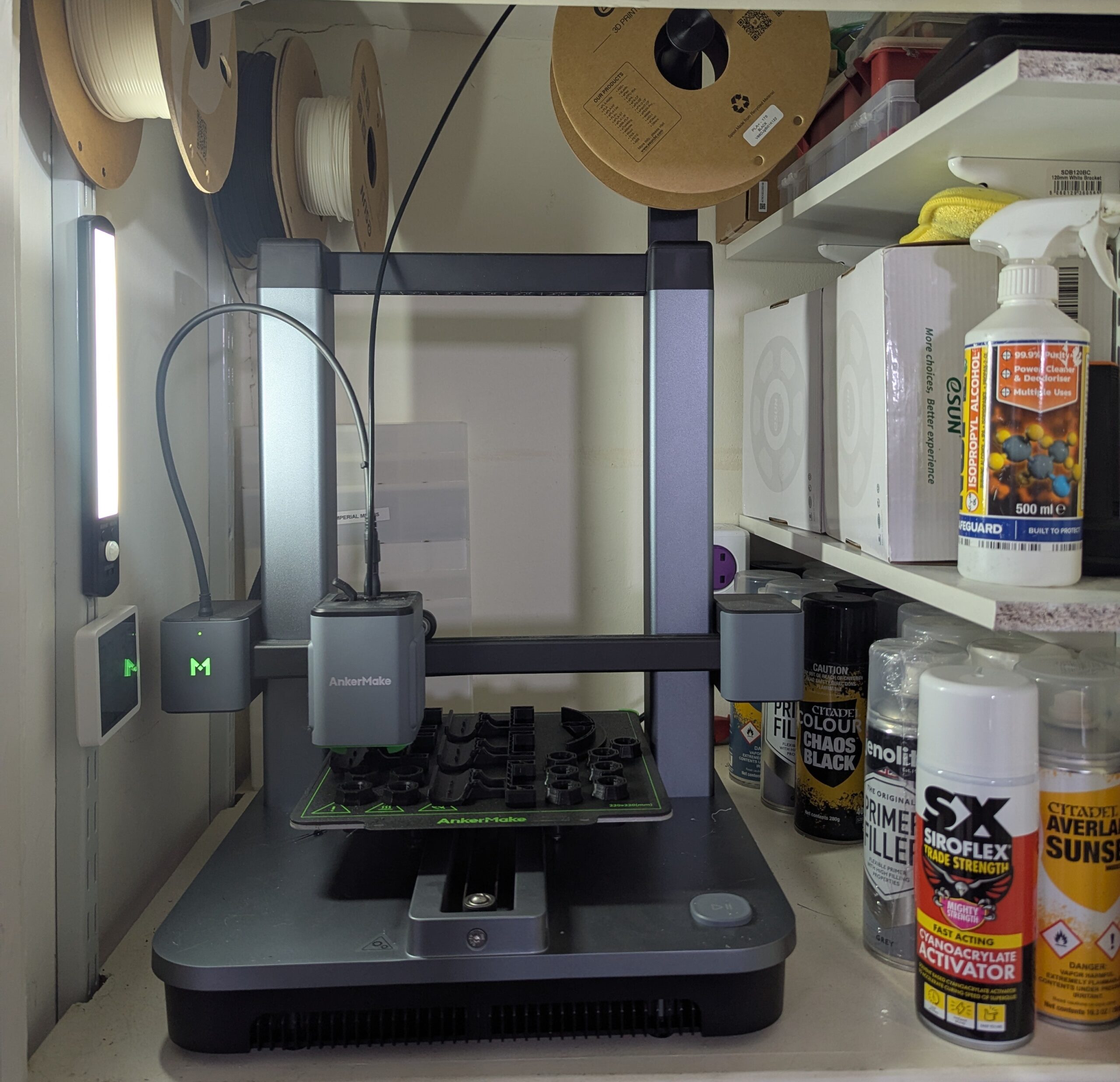
A Beginner’s Guide to Owning a 3D Printer in Urban England


3D printers are quickly becoming as common in our homes as any other domestic appliance, at least, that’s how it feels these days. I’ve had one for about a year now and use it about as often as I use a jigsaw or a carpet cleaner.
If you’re just starting out on your 3D printing journey (or deciding if you even want to), here are some practical, real-world tips, especially for those living in England’s urban areas.

1) Treat It Like a Domestic Appliance

Yes, you can take 3D printing up as a hobby, tweaking every setting, experimenting with exotic filaments, and chasing the cutting edge. But don’t stress if your printer isn’t revolutionising your life immediately. For many people,
it’s simply another tool in the home. Use it for everyday tasks, quick fixes, or other hobbies. You don’t have to turn it into your entire world.

2) If It’s Broken, It’s Probably You

Failed print? Weird warping or stringing? Nine times out of ten, the culprit is user error. Maybe you forgot to clean the print bed, left greasy fingerprints all over it, or fiddled with software settings that you didn’t fully understand.
3D printers are more reliable than we give them credit for, most problems trace back to how we set them up or maintain them.

3) Essential Accessories (Don’t Go Overboard)

It’s tempting to buy every accessory under the sun. If you want just the essentials, however, here’s a short list:

A paving stone: Putting your printer on a paving stone helps reduce vibrations and keeps it stable. It’s cheap, nearly indestructible, and incredibly effective.

Isopropyl alcohol (IPA) in a spray bottle: Ideal for cleaning your print bed and other parts of the printer. Buy it in bulk and decant it into a smaller spray bottle for daily use poarticually for cleaning the filament bed.

Callipers: Handy for measuring the thickness of parts or filament and checking dimensions of areas you want your print jobs to fit into.

A decent steel ruler: Because bad measurements are the murder of all fun.

Other add-ons depend on your environment. If you have a cupboard or closed space for your printer, you might not need a filament dryer. i just store my part-used filament above the printer and that keeps it dry enough in England

4) Noise Is a Factor

3D printers can be loud, and long print jobs sometimes run overnight. If you’re in an urban setting with close neighbours, or if you work from home and worry about background noise on calls, consider placing your printer in a cupboard or enclosed space.
A simple trick is to hang towels in front of the cupboard door to help dampen the sound. Fancier enclosures are nice, but towels are cheaper and surprisingly effective.

5) Don’t Overcomplicate Filaments

For FDM or filament printing, which is the most common kind you will see, just find a reliable filament brand (for instance, eSun PLA+), pick a couple of colours you like (black and white often cover most household needs), and stick with them.
You can certainly go wild with speciality filaments, but for daily, practical prints, you don’t need an entire rainbow or a dozen exotic materials.

6) Resin Printing? Probably Not

If you’re in a small urban space (particularly with kids or pets), resin printing is likely off the table, much as they are awesome for highly detailed printing for things like models. Resin is toxic, the fumes are unpleasant, and disposing of resin waste responsibly can be a nightmare.
Unless you have a dedicated, well-ventilated workshop or shed (far from common in many city flats and terrace houses), an FDM printer is your safest bet.

7) Ignore the “Arms Race”

The 3D printing market is full of new “game-changing” models every other month. Don’t get caught in the hype. Choose a printer that’s well-supported, does what you need, and fits your budget. Treat it like buying a car: you want reliability, availability of spare parts, and basic features that meet your needs.
Also, 3D printers are great for helping out friends who don’t have one. Filament is relatively cheap, and you can ask them to buy you a spool if you end up printing a lot for them.

8) Be Realistic About Recycling

PLA and other common 3D filaments are technically recyclable, but don’t put it with your other recycling plastic, as the centres can’t tell them apart.
You’ll likely end up with a bin of wasted prints and supports. If you truly want to recycle, you may have to pay a specialist service. Be aware that “biodegradable” doesn’t mean it vanishes in weeks or months—it can take years. I use a propper dedicated recycling company and fill up a box which i have to have paid to be taken away (3dprintingwaste.co.uk)

9) Beware of Supports

Supports can help print more complex designs, but they waste filament, increase print time, and can be frustrating to remove cleanly. Wherever possible, seek out support-free designs or modify models to minimise the need for them. Your printer will thank you, and so will your recycling bin.

10) Finishing Touches (Without Overdoing It)

Super Glue: Works brilliantly for bonding PLA prints. The resulting join is often stronger than the original piece.
Sanding: Go easy, sanding creates microplastics. A good filler primer (e.g., Genolite Original Primer) can smooth out surfaces if you care about the final finish.
Painting: If you’re painting, a basic primer plus acrylic paints do the job nicely. Again, keep an eye on fumes and ventilation.

11) Choosing a Brand

Plenty of manufacturers want you to treat your 3D printer like a vacuum cleaner: buy replacement parts at their schedule and pay a premium for “official” bits. If that puts you off, consider something more open-source friendly like Prusa.
They’re pricier and not as “plug-and-play” polished, but you’ll have more freedom to upgrade and maintain your printer without feeling like the company is constantly trying to sell you more parts.
In the end, the brand you pick should be one that you trust to give you decent support (whether official or community-based), reasonable spare-part availability, and a long service life. If you don’t mind the consumerist approach, pick whatever brand suits your budget and tolerance for maintenance.

Final Thoughts

3D printing has grown beyond the realm of hardcore hobbyists tinkering in their sheds. It’s now a practical, everyday tool, especially for quick home fixes or small, personalised projects for those in an urban environment.
You do have to think about noise, ventilation, and space more than someone in a big house with a sprawling workshop. But once you have those sorted, a 3D printer can be a wonderful addition to your home.
Just remember: keep it clean, keep it stable (hello, paving stone!), buy good filament, and don’t worry if you’re not pushing the cutting edge of 3D printing technology. Sometimes, a simple printer that “just works” is all you need.

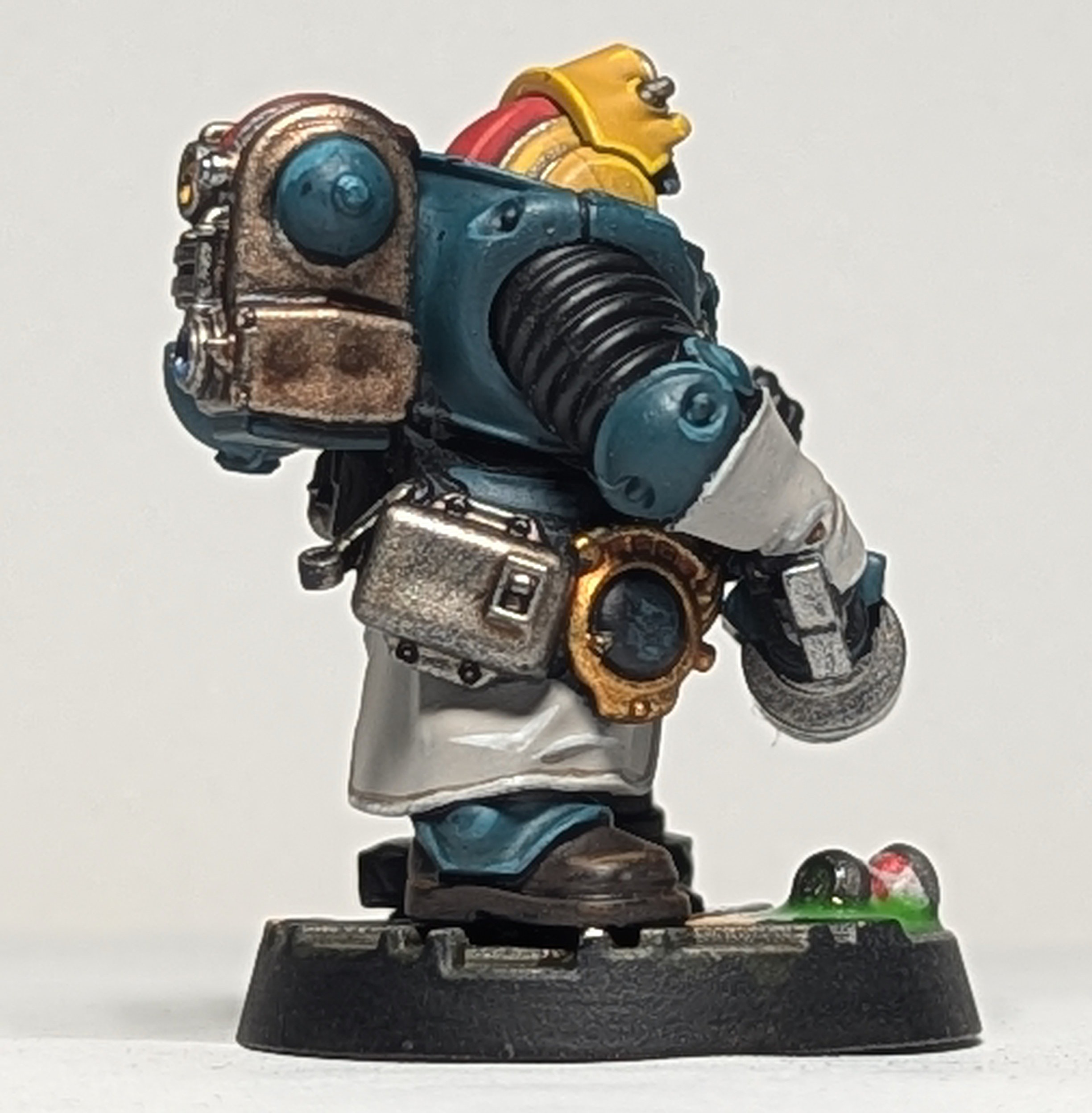
Necromunda Squat Painting Guide


Painter: Dultoriminis

Model(s): Necromunda Ironhead Squat Prospectors Gang

Paint(s): Chaos Black (spray), Averland Sunset, Yriel Yellow, Mephiston Red,Evil Sunz Scarlet,Thousand Sons Blue,Caliban Green,Agrax Earthshade,White Scar,Rakarth Flesh,Grey Seers,Rhinox hide, Mornfang Brown,Abaddon Black,Eshin Grey,Leadbelcher,Nuln Oil,Stegadon Scale Green, Baharroth Blue, Nuln Oil, Iron Hands Steel,Bugmans Glow, Cadian Fleshtone, Kislev Flesh.

Method(s):

Start by spraying the whole figure Chaos Black

Helmet

Red Stripe (On Helmet)

Armour Plating

    • Basecoat: Mix Thousand Sons Blue and Caliban Green (Ratio of 1:1).
    • Wash: Use Agrax Earthshade, applying only in the recesses and around rivets.
    • Highlight: Add White Scar to your base mix (2:1) for highlights and to paint scratches/scuffs.
    • Lowlight for Scratches: Add Abaddon Black to your base mix (3:1) and paint in parallel to the highlights to create the illusion of deep scratches.

Armour Trim (and Light cloth) 

Underclothes and Boots

Steel

Visor

Skin

Notes

  • Why Spray Chaos Black First?
    Spraying with Chaos Black before Leadbelcher gives a richer and smoother metallic finish.


The Magic of the Emperor

This is just a silly little post, but enough people found it amusing that I thought I’d cross post it here.

I was asked to do a reading at a friend’s wedding and was presented with a poem that’s often used for such occasions. However, considering that at least the groom was a serious warhammer nerd — I decided to make a slight alteration.

Just for fun, I recorded the altered version and sent it through. It sounded so good that I was actually tempted to really read it out during the ceremony.
However, since the bride was wearing Converse, I figured she might catch me halfway down the aisle and kick me to death if I did! Better safe than sorry, I suppose.

I present it here for your amusement.

The Original:

The Magic of Love by Helen Steiner Rice
Love is like magic, and it always will be, For love still remains life’s sweet mystery.
Love works in ways that are wondrous and strange, And there’s nothing in life that love cannot change.
Love can transform the most commonplace Into beauty and splendour and sweetness and grace.
Love is unselfish, understanding and kind, For it sees with its heart, and not with its mind.
Love is the answer that everyone seeks; Love is the language that every heart speaks.
Love can’t be bought, it is priceless and free. Love, like pure magic, is life’s sweet mystery.

And my alternative:

The Magic of the Emperor by Ciaphas Cain
The Emperor is like magic, and he always will be, For the Emperor still remains life’s sweetest mystery.
The Emperor works in ways that are wondrous and strange, And there’s nothing in life that the Emperor cannot change.
The Emperor can transform the most commonplace, Into beauty and splendour and sweetness and grace.
The Emperor is unselfish, understanding and kind, For he sees with his faith, and not with its mind.
The Emperor is the answer that everyone seeks; The Emperor is the language that every heart speaks.
The Emperor can’t be bought, he is priceless and free. The Emperor, like pure magic, is life’s sweet mystery.

Printing PDF’s for RPG’s

I have to own to being a little bit old fashioned when it comes to gaming books, I do love a good physical book and in particular a good physical rulebook for RPGs.

And while I do appreciate it when small third party producers make small adventure packs or supplements to their gaming systems, its really sad that they can’t sit with the main books. So I’ve long looked at getting these things printed out, and while I have bitten the bullet a few times its never been very satisfactory either in terms of quality, usability or cost and none of them look like they go with the main published books.

But I’m pleased to say I found a really good company that ticks all the boxes and gives me exactly what I want at a sane price point, that company is https://doxzoo.com/ . Let me run through the settings, purchase, and results.

So my source materials are the 2 amazing RPG’s I am currently obsessed with:

  1. The perfect Warhammer 40K RPG by Cubical Seven.
  2. The excellent Dune RPG by Modiphius.

Both of these companies produce a ton of material and do very high-quality printed versions of their main stuff 1. but they also do lots of smaller supplements that never seem to make it into a printed form.

Both companies supplements come in the form of well laid out PDFs, that have print-bleed areas, so are ideal for getting physically printed.

DoxZoo provide a huge variety of settings on their website that you can apply to any uploaded PDF and then previewed, the settings I have found work the best are:

  • Binding Form: Booklet
  • Orientation: Portrait
  • Paper size: Letter
  • Printed sides: Double sided
  • Print in: Colour
  • Paper colour: White
  • Paper finish: Matt (ultra smooth)
  • Paper weight: 100 gsm
  • Binding position: Left long edge
  • Card cover: None
  • Scale artwork: Scale to best fit
  • Corners: Square

This gives me an end result that is nearly impossible to tell from the main books.

Obviously price depends on the number of pages you want printing, but with 21 pages coming out at £4 including postage and packaging, its amazing value

Other than some scaling to cope with the hard back nature of the main books you can’t tell them apart.
The booklet format copes very well with the small number of pages. It’s basically just a magazine that uses staples rather than glue. This works out exceptionally well and folds out flat without damage for reference.
The quality is utterly perfect, it just is a professional print job
The format works well from just a few pages well into 50+
The only issue I’ve had at all is that sometimes if your cutoff is a little bit tight, then you might lose a couple of millimetres, but this is rare and has not ruined anything.

There you go, a good value service to solve an old problem.


  1. ,the Artwork used by Cubical Seven and the hard cover character sheets by Modiphius are both stand out features[]

Innsmouth Mystery Board Game

I love to see friends grow and do things they love, A long-time friend and fellow geek Tim has released his own mini board game.

Its a beautiful labour of love, as Tim says

The whole thing is essentially an art project for me, to see if I could do it. It is being sold at cost, not to make any money, and I am working on my next game.

Innsmouth Mystery is a ‘mint tin game’, which means a game that fits in a small tin. It has cards, dice, counters and meeples (the little figures).

you can get it from https://www.thegamecrafter.com/games/innsmouth-mystery

Update

Tim has done a playthrough guide